Aluminum casement windows are side-hinged windows that open outward, usually with a hand-operated crank. Their clear opening can bring in a broad sweep of air. Slim aluminum frames also leave more glass visible, giving rooms an unobstructed view and a crisp architectural line.
The frame material matters. Aluminum is strong and durable, but it conducts heat readily. A thermal break—a nonmetallic barrier inside the frame—can reduce heat transfer. The U.S. Department of Energy’s Energy Saver guidance estimates that windows account for about 25–30% of residential heating and cooling energy use. That figure is a reminder, not a promise: actual performance depends on the glass, frame, climate, installation, and how the window is used. Check certified ratings, including U-factor and solar heat gain coefficient, rather than judging a window by appearance alone.
As building-science expert Joseph Lstiburek is often quoted: “Windows are holes in the wall.” It is a blunt phrase. Still, it captures why careful detailing matters. A well-made casement can close tightly against its seals, but a poorly installed one may leak air or admit water around the frame. Before choosing, consider the opening direction, nearby paths or landscaping, hardware access, and local weather exposure. Small details count. This guide explains how aluminum casement windows work, where they fit, and what to check before buying. One caution: attractive frames do not guarantee good performance. The specifications—and the installation—tell the fuller story.
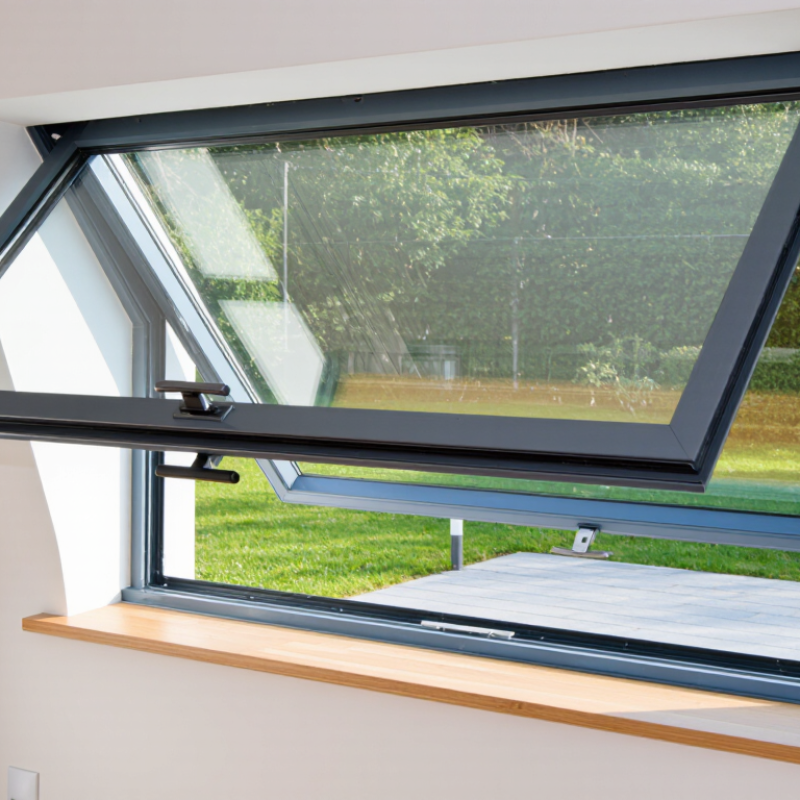
An aluminum casement window has a sash attached to the frame by hinges along one vertical side. The sash swings open, commonly outward, using a handle or crank. That is the basic distinction. Unlike a sliding window, it does not need one panel to overlap another, so the opening can provide a broad path for fresh air.
The frame is usually made from shaped aluminum sections joined around the glass. Aluminum is strong, which allows relatively slim sightlines and generous glass areas. But metal also transfers heat readily. A thermal break—a less conductive material between the frame’s inner and outer sections—can reduce that transfer. Small detail, big effect. Gaskets around the sash compress when the window closes, while locking points help pull it snug against the frame. The actual seal depends on the design and how well the window is installed.
A window’s performance also comes from its glass, hardware, drainage paths, and fit in the wall opening. For example, a sash that closes unevenly may leave a noticeable draft near a corner. A narrow frame alone does not guarantee good insulation or smooth operation. I would compare the full assembly, not just the aluminum profile, and check that the handle moves without forcing it.
An aluminum casement window uses a hinged sash that swings outward from one side. Its frame holds the glass, supports the hinges, and transfers the sash’s weight to the surrounding wall. Aluminum is strong for its weight, so the frame can often have relatively narrow profiles and leave more glass visible. Many designs include a thermal break: an insulating strip between the inner and outer aluminum sections that slows heat transfer. The exact performance depends on the whole window, including the glass, seals, and installation.
The opening mechanism is simple, but its parts work together. Turning a handle moves a small crank arm, which pushes the sash outward; some models use a different operator. Hinges guide the movement, while a locking handle or multipoint lock draws the sash back against the weatherstripping. That compression helps limit drafts and water entry when the window is shut. A tight fit matters. Yet a frame that looks sturdy can still feel stiff if hinges are poorly adjusted or debris collects near the track. Check that the sash opens smoothly and that drainage slots along the frame remain clear, especially after heavy rain.
An aluminum casement window has a fixed outer frame and a hinged sash that swings open. The frame includes a head across the top, jambs along the sides, and a sill at the bottom. The sash holds the glass and moves with the hinges, usually attached to one side. Small parts matter. Many frames include a thermal break, an insulating strip that separates interior and exterior aluminum surfaces. This helps reduce heat transfer, though performance also depends on the glass, seals, and installation.
The glazing unit is secured in the sash by glazing beads, narrow strips that hold the glass in place. Gaskets and weatherstripping sit around the glass or sash to limit drafts and water entry. A crank or operator connects the handle to the sash and controls its movement.
A locking mechanism pulls the sash snug against the frame when closed. Some windows also have several locking points. Look for drainage channels and small weep openings along the lower frame; they let collected water escape. Their placement varies by design. During inspection, check that the sash opens smoothly and the seals are not cracked or flattened. A stiff handle can signal wear, but it may also need adjustment. The exact layout differs among window systems.
Aluminum casement windows are hinged at the side and open outward, usually with a handle or crank. Their slim frames can leave more glass visible, bringing in daylight without bulky-looking profiles. A single casement works well in a narrow opening. For a wider view, two sashes can meet in the center and open separately. Fixed sidelights are another option, adding glass beside an operable sash while keeping part of the assembly sealed.
There are practical variations. A casement can sit beside a fixed panel, or be paired with a top-hung vent for different opening patterns. Hinge position matters: left- or right-hand operation affects furniture placement and how people move through a room. Grid patterns can divide the glass into smaller visual sections, though they also change the amount of uninterrupted view. Small choice, noticeable effect.
Frame depth, glazing thickness, hardware clearance, and the wall opening all influence which configuration will fit. Thermal breaks can reduce heat transfer through the aluminum frame, but overall performance also depends on the glass and installation. A broad paired window may look balanced on paper, yet prove awkward near a walkway. It is worth checking the opening direction at the actual site, not just on a drawing.
What Are Aluminum Casement Windows?
What Are Its Main Benefits and Limitations?
An aluminum casement window is hinged at the side and opens outward, often with a crank. Its slim frame leaves more glass visible and can make a room feel brighter. Aluminum is rigid, so it can support broad panes without bulky frame sections. It also resists rot and needs little routine upkeep. A wipe-down is usually enough.
The trade-off is heat transfer. Aluminum conducts heat readily, so an unbroken frame can feel cold and encourage condensation in winter. Thermal breaks reduce this path, but performance depends on the full window, seals, glazing, and installation. The U.S. Department of Energy’s Energy Saver reports that windows account for about 25–30% of residential heating and cooling energy use. That is a meaningful share. The National Fenestration Rating Council’s certified ratings let buyers compare U-factor and solar heat gain coefficient, rather than judging frames by appearance alone. Casements can seal tightly when closed, yet exposed hinges and crank hardware may need adjustment over time. Strong wind can also make outward-opening sashes awkward on exposed elevations. Not always. Check the opening dimensions and drainage details before choosing; sometimes, the frame is not the weak point, but the fit.
| Topic | What to Know | Main Benefit | Limitation or Consideration |
|---|---|---|---|
| Window type | A casement window is hinged at the side and opens outward or inward, usually with a handle or crank. Its frame and sash are made primarily of aluminum. | The sash can open wide, providing direct ventilation and a relatively clear view when open. | The opening sash needs clearance, which may affect walkways, screens, shutters, or nearby landscaping. |
| Frame strength and appearance | Aluminum is a strong, relatively lightweight metal, allowing many designs to use slim frame profiles. | Slim profiles can leave more visible glass area and suit contemporary or minimalist designs. | The achievable frame size and glass area depend on the window design, glass weight, hardware, and structural requirements. |
| Thermal performance | Aluminum conducts heat readily. Many modern units use a thermal break—a less-conductive material separating the inner and outer frame sections. | Thermally broken frames can reduce heat transfer through the frame compared with non-thermally-broken aluminum frames. | Thermal breaks do not make every window equally efficient. Check the complete window’s rated performance, glazing, seals, and installation. |
| Ventilation and sealing | When closed, the sash typically presses against seals around the frame; when open, it can direct breezes into the room. | Casement designs can provide effective ventilation and a tight closure when correctly made, installed, and maintained. | Air and water performance varies by product and installation. Worn seals, poor adjustment, or inadequate installation can reduce performance. |
| Maintenance and finish | Aluminum frames do not rot like wood and are commonly finished with a durable coating or anodized surface. | Routine care is generally limited to cleaning the frame and glass, checking seals, and keeping hinges and drainage paths clear. | The finish can be scratched or damaged. Coastal salt and pollutants can increase corrosion risk, so follow suitable cleaning and care guidance. |
| Operation and access | Hinges and operating hardware support the sash; many casement windows use a crank or handle to open and close it. | The operating handle can make the sash convenient to open, including in some locations where reaching a sliding sash is awkward. | Hardware may need adjustment or replacement over time. Opening direction and sash reach should be considered during planning. |
| Cost and selection | Price depends on dimensions, glazing, thermal-break design, finish, hardware, and installation requirements. | The combination of strength, slender profiles, and low routine maintenance can make aluminum a suitable option for many projects. | A basic non-thermally-broken unit may not suit energy-sensitive applications. Compare whole-window ratings and installation details, not frame material alone. |
Its sash is hinged along one vertical side and usually swings outward. A handle or crank moves it.
Slim frame sections can leave more glass visible. When open, the sash creates a broad path for fresh air.
Aluminum is rigid, resists rot, and needs little routine upkeep. A wipe-down is usually enough.
It separates the frame’s inner and outer metal sections with less-conductive material. This can reduce heat transfer. Small detail, big effect.
Not always. Gaskets and locking points help, but the seal depends on the design, fit, and installation.
Check certified U-factor and solar heat gain ratings. Frame appearance alone tells you little about insulation.
Hinges and crank parts may need adjustment over time. The handle should move smoothly, without forcing it.
An unbroken aluminum frame can feel cold and may encourage winter condensation. Outward-opening sashes can also be awkward in strong wind. Check drainage and fit, too.
Aluminum casement windows are windows with a lightweight metal frame and one or more hinged sashes that open outward or inward from the side. Their frame supports the glass, while hinges guide the sash and a handle or operator helps open, close, and secure it. Key parts typically include the frame, sash, glazing, hinges, handle, locking hardware, and weather seals. Together, these components determine how the window moves and how well it fits its opening.
Available designs can include single- or multiple-sash layouts, different opening directions, and a range of sizes and glazing options. Aluminum casement windows can offer a slim, sturdy frame, ample natural light, and wide ventilation when open. Their smooth operation and straightforward forms also suit many architectural styles. However, aluminum can transfer heat more readily than some other frame materials, so thermal breaks and suitable glazing may be important. The outward swing can also require clear space outside the window.