Direct factory supply of certified AS2047, CE, and TDI impact-tested aluminum fenestration and awning hardware assemblies engineered for high wind-loads, thermal isolation, and structural longevity.
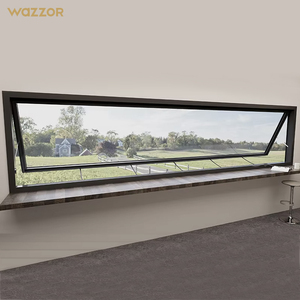
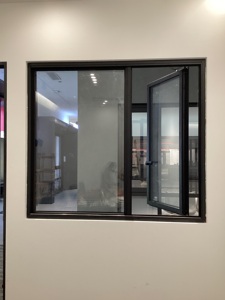
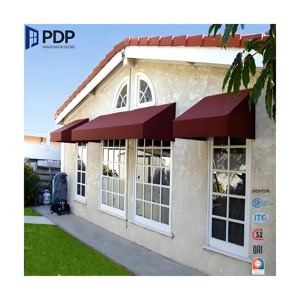
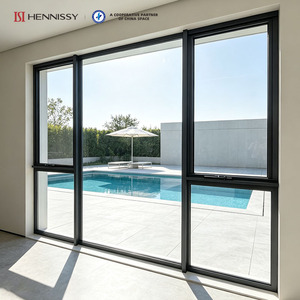
Evaluating structural tolerances, multi-point lock mechanics, and thermal break engineering for large-scale architectural supply chains.
Global procurement directives for commercial and high-end residential projects have shifted fundamentally from purchasing isolated hardware components to specifying fully integrated aluminum fenestration assemblies. In China's modern manufacturing hubs, top window hardware suppliers operate not merely as ironmongery fabricators, but as comprehensive system engineers combining metallurgy, polymer science, and mechanical kinetic design.
When evaluating top China window hardware factories, leading international architectural buyers examine the structural synergy between the extrusions—typically 6063-T5 structural aluminum alloy—and the kinetic hardware components including continuous friction stays, heavy-duty gas struts, and multi-point locking gear boxes. Proper hardware integration ensures zero sash deflection under maximum design wind pressures (DP values exceeding 3000 Pa).
Quantitative criteria utilized by engineering directors to qualify OEM/ODM window hardware suppliers in China.
| Performance Metric | Commercial Grade (Grade A) | Standard Residential | Testing Standard / Protocol |
|---|---|---|---|
| Primary Alloy Composition | 6063-T5 / 6060-T6 Aluminum | Commercial Standard Aluminum | GB/T 5237.1 / ASTM B221 |
| Hardware Mechanical Endurance | 25,000 to 50,000 Cycles | 10,000 Cycles | EN 13126-8 / AAMA 904 |
| Corrosion Resistance (Salt Spray) | 1,000 Hours Neutral Salt Spray (NSS) | 480 Hours NSS | ASTM B117 / ISO 9227 |
| Thermal Transmittance (U-Factor) | 1.2 – 1.8 W/m²·K (Thermally Broken) | 2.4 – 3.2 W/m²·K | NFRC 100 / EN ISO 10077-2 |
| Water Penetration Resistance | 600 Pa – 900 Pa Static Head | 300 Pa Static Head | AS 4420.2 / ASTM E331 |
| Acoustic Isolation Rating | STC 38 – STC 45 (Acoustic Double/Triple IGU) | STC 28 – STC 32 | ASTM E90 / ISO 140-3 |
Key technological shifts altering how architects, master developers, and façade consultants procure hardware from Chinese factories over the next decade.
Leading Chinese factories are migrating extrusion smelting operations to southern provinces (Yunnan, Sichuan) to utilize 100% renewable hydroelectric power. This reduces the embodied carbon footprint of window frames by up to 68%, satisfying EU CBAM (Carbon Border Adjustment Mechanism) and US LEED v4.1 requirements.
Architectural specification is rapidly advancing from manual sashes to hidden electronic actuators. Top Chinese suppliers now co-engineer concealed motor drives inside the frame rebate, allowing automated weather-sensor triggering, rain-closing, and smart HVAC building management integration.
Coastal and tropical high-humidity deployments (such as Florida, Gulf Region, Australia, and South East Asia) require hardware upgrade paths from standard Zinc Alloy to forged SUS316 Stainless Steel multi-point gearboxes paired with physical vapor deposition (PVD) anti-corrosion finishes.
How technical advancements in thermal isolation, structural sealing, and friction hinge kinetics redefine modern window performance.
Monolithic non-thermal frames are obsolete in modern building codes. Evolution centers around multi-cavity polyamide insulating struts combined with low-density polyolefin foam inserts, drastically reducing frame thermal conductivity to achieve passive house insulation levels.
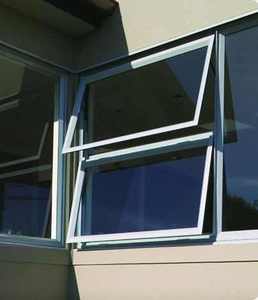
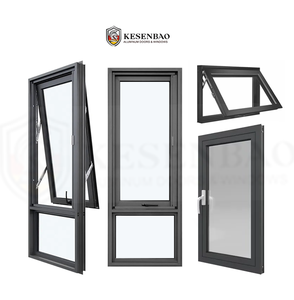
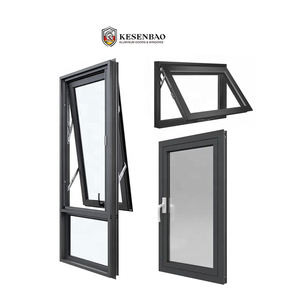
For oversized top-hung awnings and gas-strut server windows, hinge mechanics must accommodate heavy double/triple glazed glass weights up to 120kg per sash. Precision engineering utilizes high-viscosity hydraulic cylinders paired with adjustable friction stays for smooth, effortless operation.
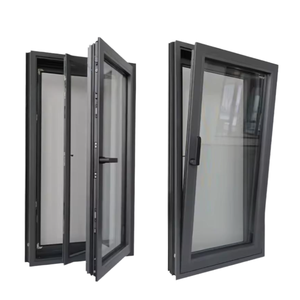
Replacing legacy surface-mounted latch catches, modern concealed multi-point drive gear engages mushroom-head locking cams at top, side, and bottom frame positions simultaneously. This delivers enhanced forced-entry protection and continuous weather-seal gasket compression.
Partnering directly with premier Chinese window hardware and profile manufacturers bridges the gap between design vision and physical execution. From raw billet extrusion to final ocean-crate packing, rigid quality verification safeguards project timelines.
By controlling both profile extrusion and hardware machining, our integrated factory floors eliminate fitting discrepancies between frame tracks and sliding rollers or corner cleat connectors.
Direct technical guidance covering international compliance, minimum order volumes, material certification, and logistics execution.
For coastal and high wind load zones, specify 6063-T5 or 6060-T6 aluminum profile extrusions with a minimum wall thickness of 1.4mm to 2.0mm for windows, and 2.0mm to 3.0mm for sliding doors. Thermal breaks should utilize PA66-GF25 polyamide structural strips crimped into the inner and outer extrusions. Hardware must feature 304 or 316 grade stainless steel friction hinges and multi-point locking gear to withstand cyclic dynamic pressure and salt fog oxidation.
Top-tier Chinese manufacturers submit full window assemblies to accredited third-party laboratories (such as Intertek, AZUMA, or SGS) for NATA-certified AS2047 testing in Australia or NFRC/AAMA testing in North America. Testing evaluates air infiltration (AS4420.4), water penetration resistance under static pressure (AS4420.5), deflection under ultimate limit state wind pressure (AS4420.6), and thermal transmittance performance.
Standard architectural extrusions in stock finishes (such as anodized silver or powder-coated black/white) typically require 2 to 3 weeks for fabrication. Custom extruded die development requires approximately 10 to 14 days, with bulk production requiring 3 to 4 weeks post-sample approval. For pre-glazed complete window assemblies with insulated glass units (IGUs), total manufacturing lead times range between 4 and 6 weeks prior to port dispatch.
Multi-point locking gear drives multiple locking pins or mushroom cams into heavy-duty keep plates along the length of the window frame sash via a single handle operation. This distributes pull-in pressure evenly across the entire perimeter EPDM weather gasket, resulting in superior air tightness, higher water penetration resistance under storm conditions, improved acoustic damping, and significantly higher forced-entry resistance.
To prevent white rust oxidation on raw zinc components and tea-staining on stainless steel during ocean transit, products undergo multi-layer export packaging. Hardware is vacuum-sealed in polyethylene protective bags containing desiccant silica gel packets, packaged into reinforced corrugated master cartons, and palletized onto shrink-wrapped fumigated wooden pallets or fully enclosed wooden crates.
Yes. Top Chinese window hardware manufacturers operate advanced surface finish shops capable of matching hardware handles, hinges, and cover caps precisely to architectural profile colors. Options include Electro-Plated finishes, PVD (Physical Vapor Deposition), Fluorocarbon PVDF painting, and custom RAL powder coating with strict color variance tolerances (ΔE < 0.5).