Manufacturer & Installer View Project Portfolio Factory-direct aluminum, vinyl & impact-rated systems
Sales & trade:(832) 681-9190 Contact Us

China Wholesale Thermal Break Manufacturers & Manufacturer

Engineered Polyamide Insulated Aluminum Extrusions & Structural Window Systems for Global B2B Procurement

Wholesale Supply Catalog

High-Performance Thermal Break Systems & Components

Direct factory supply of certified PA66 GF25 polyamide insulating strips, broken bridge aluminum profiles, and complete NFRC/CE compliant window and door assemblies.
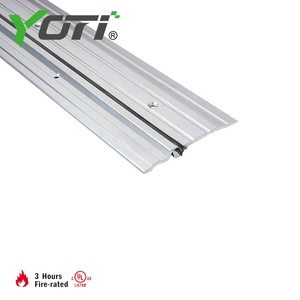
YDT324 Thermal Break Bumper Seal Threshold

YDT324 Thermal Break Bumper Seal Threshold-Mill Aluminum 7/8" X 5" Thermal Barrier Threshold for Door Modern Design Screw

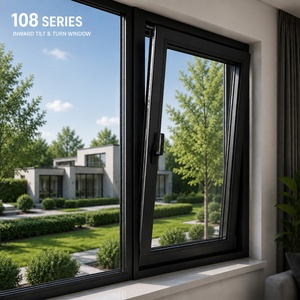
NFRC Four Seal Thermal Break Tilt And Turn Windows

NFRC Four Seal Thermal Break Tilt And Turn Windows With 54mm Insulation For High Rise Bedroom Apartment

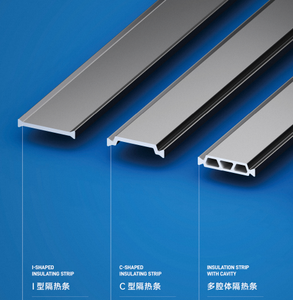
High-Performance PA66 GF25 Thermal Break Insulation Strip

High-Performance PA66 GF25 Thermal Break Insulation Strip for Aluminum Broken Bridge Window Systems

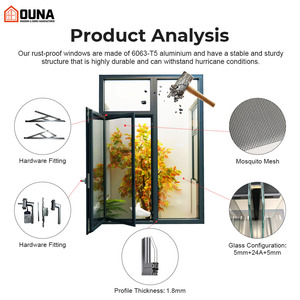
OUNA Factory Direct Customized Waterproof Aluminum Casement Window

OUNA Factory Direct Customized Durable Energy-Efficient Waterproof Aluminum Casement Window Double Tempered Glass Thermal Break

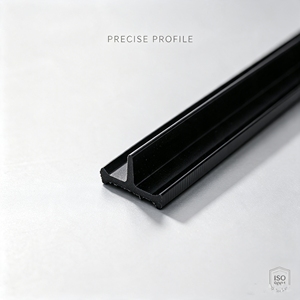
T Shape Thermal Break Strip PA66 Polyamide

T Shape Thermal Break Strip PA66 Polyamide for Aluminum Profile Insulating Bar Heat Insulation Grade Nylon Export Quality

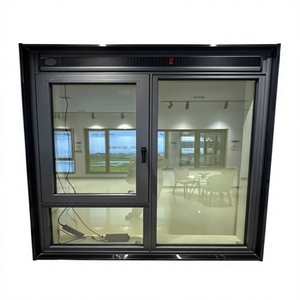
Double Sash Thermal Break Tilt Turn Windows

Double Sash Thermal Break Tilt Turn Windows With 28mm Insulation Stainless Steel Screen For Family Residential House

CE Certified Thermal Break Aluminum Profiles 6000 Series

CE Certified Thermal Break Aluminum Profiles 6000 Series T3~T8 Temper White/Black/Silver for Doors Windows Cutting

Thermal Break Hidden Screen Casement Windows

Thermal Break Hidden Screen Casement Windows With 35.3mm Strip Folding Mesh For High Rise Bedroom Balcony

Technical Insight Whitepaper

The Engineering Mechanics of High-Gain Thermal Barrier Extrusions

Understanding the thermodynamic, structural, and chemical engineering that separates commercial-grade thermal break profiles from standard aluminum window frames.

λ ≤ 0.3
PA66-GF25 Conductivity (W/m·K)
6063-T5
Precision Extruded Alloy
U < 0.18
Thermal Transmittance (BTU/hr·ft²·°F)
80+ MPa
Transverse Tensile Strength
Information Gain Note: Polyamide vs. Pour-and-Debridge Systems

In thermal barrier architecture, two primary technologies dominate: Polyamide (PA66 GF25) Mechanical Strip Insertion and Pour-and-Debridge (P&D) Polyurethane Resin. While P&D offers excellent initial thermal performance, PA66 GF25 polyamide strips provide equal thermal expansion coefficients to aluminum ($\alpha = 2.3 \times 10^{-5}/K$), preventing joint separation under extreme thermal cycling (-40°C to +80°C). For high-rise fenestration and structural curtain walls, mechanical polyamide strip insertion is the global mandatory standard for long-term shear load retention.

1. Material Science: Why PA66 GF25 is Non-Negotiable in Broken Bridge Systems

Aluminum possesses high structural strength and durability, but its high thermal conductivity ($k \approx 160-200 \text{ W/m·K}$) makes uninsulated aluminum profiles thermal energy drains in building envelopes. A thermal break (or broken bridge) mechanically splits the exterior aluminum extrusion from the interior extrusion using a low-conductivity material.

Leading Chinese wholesale manufacturers utilize Polyamide 66 reinforced with 25% Glass Fiber (PA66 GF25). The addition of glass fibers is critical: unreinforced nylon expands and contracts at a rate vastly different from aluminum. Glass fiber orientation during extrusion aligns the coefficient of thermal expansion (CTE) with the aluminum alloy, ensuring structural stability under high wind pressures and extreme temperature differentials.

Performance Characteristic PA66 GF25 Polyamide Strip Pour-and-Debridge Polyurethane PVC / Vinyl Insert
Thermal Conductivity (W/m·K) 0.28 - 0.30 0.12 - 0.15 0.17 - 0.21
Transverse Tensile Strength ≥ 80 MPa ≥ 50 MPa ≥ 35 MPa
Heat Deflection Temp (HDT @ 1.8 MPa) 250°C (Powder Coat Bake-Safe) 110°C (Pre-Finish Assembly Only) 75°C (Deforms under sun load)
Shear Strength After Thermal Cycling Retention > 95% Retention > 75% Retention < 50%
Structural High-Rise Suitability Exceptional (Curtain Walls & High-Rises) Moderate (Mid-Rise Residential) Low (Low-Rise Residential Only)

2. Precision Extrusion and Mechanical Crimping Technology

The manufacturing process of thermal break aluminum profiles follows three critical phases:

  • Groove Knurling: Mechanical teeth are knurled into the keyways of the inner and outer aluminum extruded profiles. This increases mechanical interlocking friction.
  • Strip Insertion: Automated high-precision feeders slide the PA66 GF25 insulating strips (C-shape, T-shape, I-shape, or multi-cavity hollow configurations) into the knurled keyways.
  • Rolling & Crimping: Heavy-duty steel rollers exert regulated force onto the aluminum flanges, forcing the aluminum teeth to bite securely into the polyamide strip. Quality control labs subject crimped profiles to longitudinal shear testing per EN 14024 standards.
Strategic Sourcing Analysis

Global B2B Procurement Trends in Thermal Break Manufacturing

Macroeconomic shifts, energy regulations, and building code updates driving architectural specification changes for importers, fabricators, and commercial contractors.

1. Multi-Cavity & Aerogel Hybrid Insulations

Standard 14.8mm to 24mm flat thermal strips are being replaced by 35.3mm+ multi-cavity hollow polyamide profiles filled with expanded polyolefin (PE) foam or aerogel insulation. Sourcing managers are targeting profile depth configurations that achieve Passive House U-values below 0.8 W/m²K ($U \le 0.14 \text{ BTU/hr·ft²·°F}$).

2. Supply Chain Integration & Complete Systems

Global buyers are shifting away from sourcing raw extrusions and components separately. Wholesale procurement now heavily favors integrated manufacturing partners who supply pre-tested systems—combining 6063-T5 thermally broken frames, German multi-point locking hardware, double/triple IGUs, and integrated hidden mesh screens in consolidated containerized shipments.

3. Rigorous Decarbonization & Green Certifications

With Europe’s CBAM (Carbon Border Adjustment Mechanism) and US LEED v4.1 requirements, B2B buyers mandate verified EPDs (Environmental Product Declarations) and recycled low-carbon primary aluminum billet sourcing. Chinese tier-1 OEMs utilizing hydropowered aluminum smelting are gaining decisive market share.

R&D Roadmap

Key Technical Innovations in Chinese Thermal Break Fenestration

How state-of-the-art tooling, surface treatments, and sealing engineering are redefining window structural longevity.

Quad-Sealed Pressure Equalization Channels

Modern high-rise residential projects demand extreme water tightness. New four-seal tilt-and-turn designs feature co-extruded EPDM central gaskets and rainscreen drainage chambers that equalize internal pressure, preventing driven rain penetration during hurricane-force wind events.

Narrow Sightline Minimalist Architectural Profiles

Architects demand maximum daylight coefficients ($VT \ge 70\%$). R&D innovations focus on ultra-slim interlocks (20mm to 35mm visible profile) combined with high-load bearing polyamide strips capable of carrying triple-pane insulating glass units weighing over 400kg per panel.

Advanced Fluoropolymer & Anodized Finishes

To resist salt-spray corrosion in coastal deployments, export-tier profile manufacturers apply Qualicoat-certified powder coatings, PVDF (polyvinylidene fluoride) finishes, and Class I anodic oxidation (25 micron thickness), guaranteeing color stability against harsh UV exposure.

Enterprise Capabilities

Why Partner with Our Wholesale Thermal Break Manufacturing Network

Combining 30 years of engineering leadership, direct factory pricing, and rigorous international quality control standards.

30+
Years Manufacturing Expertise
2-4 Wks
Optimized Production Lead Time
100%
NFRC & CE Certified Options
50+
Export Destination Countries

Full Vertical Integration

From aluminum alloy ingot melting and billet casting to high-tonnage extrusion (up to 3,600T presses), automated polyamide strip crimping, double glass unit (IGU) fabrication, and full window assembly—every step is executed under one roof to eliminate supply chain friction.

Custom Engineering & Tooling Dies

We provide full OEM/ODM custom die extrusion services. Our in-house tooling center can design, simulate (using FEA thermal analysis), cut dies, and output custom profile prototypes within 10 to 14 working days, supporting complex architectural project requirements.

Consolidated Global Logistics & Crating

Products are crated in sea-worthy heavy-duty reinforced wooden boxes with protective film, anti-collision corner guards, and moisture-absorbing desiccant packs. We offer FCL and LCL containerized consolidation with full shop drawings, NFRC thermal reports, and installation guides.

Buyer Knowledge Base

Frequently Asked Questions for Wholesale Sourcing & Procurement

Direct technical and operational answers to standard importer, architect, and general contractor procurement inquiries.

Q1: What aluminum alloy grade and temper do you utilize for thermal break extrusions?
Our premium thermal break profiles are extruded strictly from 6063-T5 or 6063-T6 architectural grade aluminum alloy. 6063-T5 offers an optimal balance of tensile strength ($\ge 170 \text{ MPa}$), yield strength ($\ge 130 \text{ MPa}$), surface finish smoothness for powder coating, and excellent extrusion precision required for tight polyamide keyway tolerances.
Q2: How do PA66 GF25 thermal break strips prevent internal glass condensation?
Glass condensation occurs when humid interior air touches cold aluminum surfaces below the dew point temperature. By bonding a low-conductivity PA66 GF25 polyamide strip ($\lambda \approx 0.3 \text{ W/m·K}$) between the inner and outer aluminum frames, the metal conduction path is physically severed. This maintains the interior frame face temperature close to ambient room temperature, eliminating condensation formation even during severe sub-zero winter exterior conditions.
Q3: Are your thermal break window systems NFRC and CE certified for regional building code compliance?
Yes. Our standard export product lines possess certified thermal performance testing data per NFRC 100/200/400 (U-factor, SHGC, Visible Transmittance, and Air Leakage) and CE EN 14351-1 certification for European markets. Detailed laboratory test reports and simulation files (WINDOW/THERM) are available upon project specification request.
Q4: What is your standard production lead time and Minimum Order Quantity (MOQ)?
For standard profile finishes (white, matte black, anodized silver), production lead times typically range between 2 to 4 weeks. Custom extrusion profile creation with new die tooling requires approximately 3 to 5 weeks. Our flexible wholesale MOQ starts at 1 metric ton for custom aluminum extrusions, or 20 set units for complete custom glazed window/door assemblies.
Q5: Can thermal break systems withstand high wind loads in coastal hurricane zones?
Absolutely. When paired with structural laminated impact glass (e.g., PVB/SGP interlayers) and reinforced structural polyamide strips (up to 54mm width), our thermal break casement and tilt-and-turn systems achieve Design Pressure (DP) ratings exceeding DP60 to DP90, fully compliant with Florida Building Code (FBC) and coastal windstorm standards.
Q6: What is the mechanical service lifespan of thermal break polyamide strips?
PA66 GF25 polyamide strips are engineered to match the 50+ year architectural lifespan of the building envelope. They resist UV radiation, chemical exposure, atmospheric ozone, and severe thermal degradation (-40°C to +120°C) without brittle fracture or loss of shear crimping tension.
Q7: How do you handle hardware compatibility for international markets?
Our extrusion keyways are designed to European Standard C-groove and Euro-groove dimensions. This enables seamless integration with premium international hardware brands such as Siegenia, Roto, Hoppe, and Sobinco, as well as high-performance custom factory-supplied stainless steel multi-point locking gear.
Q8: How are customized products packaged to ensure damage-free sea freight delivery?
Every shipment follows a multi-stage export packaging protocol: profiles and glazed units are individually wrapped in anti-scratch protective film, corner-protected with high-density EPE foam, bundled, and secured inside fully enclosed ISPM 15 compliant fumigated wooden crates or steel A-frame racks for crane/forklift unloading.

Request Factory-Direct Quotations & Technical Shop Drawings

Submit your project window schedules, profile extrusion CAD files, or custom specification requirements. Our engineering team responds within 12 hours with complete pricing, U-factor calculations, and container consolidation estimates.

Contact Us