Custom OEM fenestration profiles, thermally broken aluminum extrusions, and certified structural glazing systems tailored for commercial and high-end residential applications.
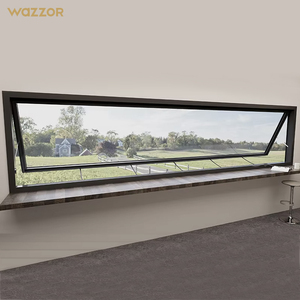
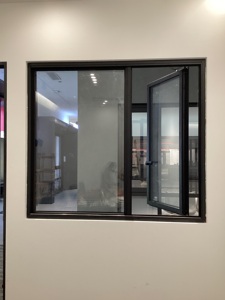
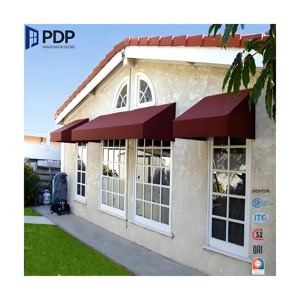
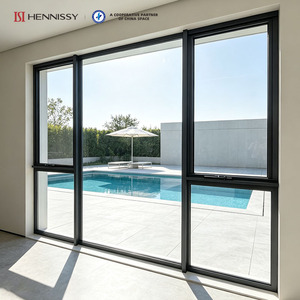
Modern commercial architecture increasingly relies on custom OEM curtain wall systems to define structural aesthetics, optimize energy efficiency, and ensure long-term structural integrity. As a specialized manufacturer operating at the intersection of metallurgical engineering and advanced architectural fenestration, providing true Information Gain requires looking beyond surface-level aesthetics into the exact physics, material science, and fabrication methodologies that dictate facade performance.
Selecting a verified OEM curtain wall factory is not merely a supplier transaction; it is a critical structural partnership. Building envelopes must endure dynamic thermal expansion, continuous wind loads, seismic sway, and aggressive atmospheric exposure. By utilizing high-grade 6063-T5 aluminum extrusions, precision polyamide thermal breaks, and factory-glazed structural silicone assemblies, top-tier OEM suppliers provide custom solutions tailored to rigid international building codes including NFRC ratings, TDI hurricane approvals, and Australian AS2047 certifications.
OEM Engineering Baseline: Monolithic, non-thermally broken aluminum facades can suffer from extreme thermal bridging, leading to interior condensation, perimeter sealant breakdown, and energy losses exceeding 40%. Direct factory integration of glass-fiber reinforced Polyamide (PA66) thermal breaks mitigates thermal bridging while preserving structural shear strength.
Our manufacturing workflow is grounded in three decades of family-owned engineering heritage and mechanic-level root-cause problem solving. Where standard distributors re-sell off-the-shelf window units, custom OEM factories design extrusions, die profiles, and glazing pocket geometries directly from architectural shop drawings.
Extruded from primary aluminum billets to achieve optimal tensile strength (minimum 185 MPa) and yield strength (minimum 110 MPa), allowing for ultra-slim sightlines without structural deflection under high wind loads.
Mechanically crimped PA66 GF25 (25% glass fiber reinforced polyamide) strips interrupt the metallic conduction path, maintaining interior surface temperatures near room ambient conditions even during extreme weather.
Equipped with heavy-duty multi-point locking gear, stainless steel rollers, and concealed friction hinges designed to support massive panel weights and deliver smooth operation over 50,000+ duty cycles.
Insulated Glass Units (IGUs) featuring dual Low-E coatings, warm-edge spacers, and double/triple laminated impact glass setups are cured in climate-controlled clean rooms using structural silicone (Dow Corning/Sika).
Specifiers and real estate developers must weigh the structural, financial, and logistical trade-offs between unitized facade panels and stick-built assembly methods when sourcing from custom OEM factories.
| Evaluation Parameter | Unitized OEM Curtain Wall Systems | Stick-Built OEM Curtain Wall Systems |
|---|---|---|
| Assembly Environment | 100% Factory Fabricated, Glazed, and Sealed | Field Assembled, Glazed, and Sealed on Site |
| Installation Velocity | Extremely Fast (Crane & Floor-by-Floor Hoisting) | Moderate to Slow (Requires Exterior Scaffolding) |
| Quality Assurance & Sealing | Controlled Clean-Room Structural Silicone Application | Subject to On-Site Weather, Dust, & Humidity Variations |
| Thermal & Acoustic Integrity | Maximum Precision (Triple Gasket Split-Mullion Systems) | Dependent on Installer Workmanship & Field Seals |
| Best Architectural Fit | High-Rise Towers, Large Commercial Facades (>10 Stories) | Low-to-Mid Rise Structures, Complex Geometry Storefronts |
| Shipping & Logistics Volume | Requires Heavy Crating & Dedicated Container Loading | Compact Bundle Extrusion Crating (Lower Freight Footprint) |
The global facade industry is undergoing a structural paradigm shift driven by stringent decarbonization mandates, evolving climate risks, and rapid urbanization. Procuring curtain walls requires forward-looking specifications that accommodate future regulatory shifts:
Environmental Product Declarations (EPDs) are now standard procurement prerequisites across North American and European commercial real estate. Custom OEM factories are transitioning to secondary recycled aluminum alloys and green hydro-powered primary billets, cutting the embodied carbon of aluminum extrusions from 18 kg CO₂e/kg down to under 4.0 kg CO₂e/kg.
Traditional double-glazed IGUs are reaching physical limits in thermal performance. The future of OEM custom facades lies in Vacuum Insulated Glass (VIG), which achieves R-values exceeding R-12 in a profile thickness under 10 mm. Combined with dynamic electrochromic glass that tints automatically based on solar incidence, curtain walls can eliminate active shading devices while dramatically reducing HVAC tonnage requirements.
Spandrel glass zones are evolving from passive vision-concealing panels into active energy generation assets. OEM curtain wall manufacturers are embedding thin-film photovoltaic elements within spandrel assemblies, turning non-vision facade areas into clean power generators that contribute directly to Net-Zero Energy Building (NZEB) status.
With changing climate patterns driving intensified storm frequencies, coastal specifications now require robust large-missile impact resistance (ASTM E1886/E1996) and dynamic cyclic pressure endurance up to ±100 PSF. OEM suppliers are reinforcing mullions with internal steel stiffeners and multi-layer SentryGlas (SGP) interlayers to ensure total envelope survival without catastrophic pressure loss.
To assist procurement managers, architects, and structural engineers in qualifying curtain wall factories, we have detailed answers to key technical questions:
Dividing a building envelope contract among separate aluminum extruders, independent glass processors, and third-party hardware brokers introduces split liability and installation friction. A single-source OEM factory eliminates handoff errors by unifying architectural engineering, die extrusion, thermal breaking, glass fabrication, structural silicone bonding, and quality assurance under one roof.
Whether you are replacing an existing commercial facade, constructing a modern multi-family development, or specifying custom residential fenestration systems, our Houston-backed engineering facility combines international manufacturing scale with localized technical oversight.
Send us your architectural elevation drawings or opening schedules. Our senior structural engineers will review your thermal, acoustic, and wind-load requirements and issue a comprehensive OEM manufacturing proposal.
Inquire Now