Direct factory supply of certified double and triple-glazed insulated glass units integrated into structural aluminum frames for commercial and residential architectural projects worldwide.
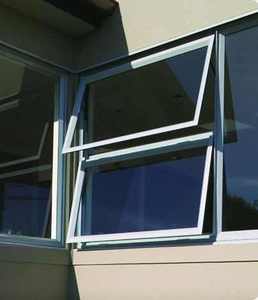
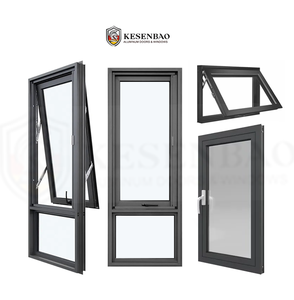
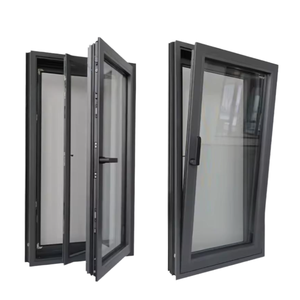
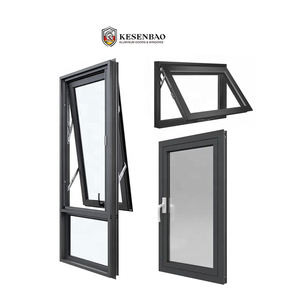
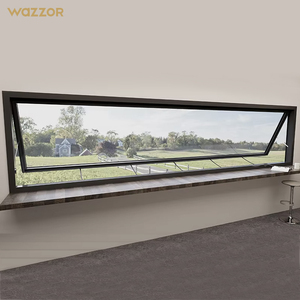
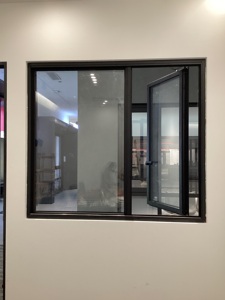
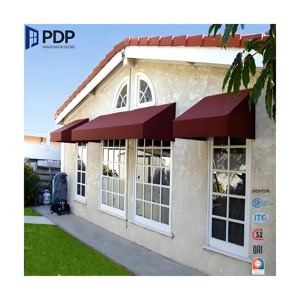
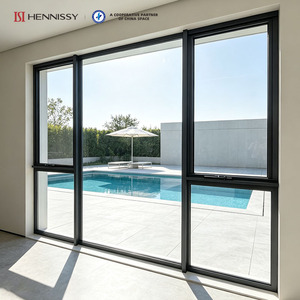
In modern architectural engineering, the exterior building envelope accounts for over 40% of operational energy consumption. As a premier global OEM custom insulated glass exporter, our manufacturing processes address the critical balance between optical clarity, structural integrity, acoustic damping, and thermal insulation. Standard single-pane glass fails to meet modern building codes such as ASHRAE 90.1, IECC, and Australian AS1288/AS2047. Modern OEM insulated glass unit (IGU) construction requires multi-chambered hermetically sealed assemblies utilizing advanced low-emissivity (Low-E) coatings, structural silicone secondary seals, and inert gas fill technology.
The lifespan of an OEM insulated glass unit depends directly on the durability of its dual-seal perimeter system. Moisture vapor ingress and noble gas leakage are the two primary causes of field seal failure in commercial fenestration. Our automated clean-room assembly lines utilize a dual-barrier sealing mechanism:
Primary Seal: Polyisobutylene (PIB) extrusion applied precisely to both sides of the spacer bar. PIB exhibits an exceptionally low moisture vapor transmission rate (MVTR), forming the initial moisture barrier and maintaining argon gas retention inside the cavity.
Secondary Seal: High-modulus Structural Silicone or Two-Part Polysulfide. This elastomeric outer sealant provides mechanical strength, bonding the glass panes together and absorbing dynamic windload forces, thermal expansion stresses, and seismic oscillations without compromising the primary PIB seal.
Furthermore, traditional aluminum spacers act as thermal bridges along the glass perimeter, leading to localized condensation and edge-heat loss. As a specialized OEM exporter, we integrate advanced Warm-Edge Spacers (composed of stainless steel engineered composites or flexible silicone foam impregnated with 3A molecular sieve desiccants). Warm-edge technology elevates edge-of-glass temperatures by up to 5.6°C (10°F), dramatically reducing U-factors and resisting interior condensation.
Sputtered magnetron vacuum deposition (MSVD) applying double or triple silver layers for max light & minimal solar gain.
Automated gas flushing achieving ≥95% inert gas concentration to suppress convective heat transfer in the cavity.
Fully tempered SGCC & CE certified glass integrated with acoustic PVB / SGP interlayers for maximum storm resilience.
To assist architects, façade engineers, and B2B buyers in selecting appropriate glass schedules for green building certifications (LEED v4, BREEAM, Passive House), the following empirical data matrix details performance values across standard OEM insulated glass configurations:
| IGU Glazing Build-Up (mm) | Coating Type | Gas Fill Space | Center U-Factor (W/m²K) | SHGC Value | VLT (%) | STC Rating (dB) |
|---|---|---|---|---|---|---|
| 6 Clear + 12A + 6 Clear | Uncoated Clear Float | 12mm Air Gap | 2.70 | 0.76 | 79% | 31 dB |
| 6 Low-E + 12A + 6 Clear | Single Silver Soft-Coat | 12mm Air Gap | 1.75 | 0.58 | 70% | 32 dB |
| 6 Double Low-E + 12Ar + 6 Clear | Double Silver Low-E | 12mm 90% Argon | 1.25 | 0.38 | 64% | 34 dB |
| 6 Triple Low-E + 16Ar + 6 Clear | Triple Silver Low-E (Solar Control) | 16mm Warm Edge Argon | 1.02 | 0.27 | 58% | 36 dB |
| 6 Triple Low-E + 12Ar + 6 + 12Ar + 6 (Triple IGU) | Dual Surface Triple Silver | Dual 12mm Argon Cavities | 0.62 (Passive House) | 0.22 | 51% | 42 dB |
| 6.38 Soundproof Lam + 16Ar + 6 Low-E | Acoustic PVB + Low-E | 16mm Warm Edge Argon | 1.18 | 0.34 | 61% | 46 dB |
*Note: U-Factors measured according to NFRC 100 protocols; Solar Heat Gain Coefficient (SHGC) and Visible Light Transmittance (VLT) measured under NFRC 200 guidelines. Sound Transmission Class (STC) verified via ASTM E90 acoustic laboratory standards.
The global insulated glass market is undergoing a paradigm shift driven by stringent decarbonization mandates, zero-carbon building initiatives, and smart city infrastructure growth. As an agile OEM exporter, we track and engineer solutions aligned with key industry developments over the next decade:
While traditional IGUs rely on gas-filled cavities (12mm–18mm thickness), Vacuum Insulated Glass (VIG) eliminates thermal convection altogether by creating a high-vacuum void ($< 10^{-4}$ Pa) between two glass sheets separated by micro-support pillars. VIG delivers thermal insulation performance equivalent to a solid brick wall (U-factors down to 0.40 W/m²K) at a fraction of the weight and profile depth. The immediate future of premium OEM fenestration lies in Hybrid VIG units: pairing a VIG laminate with a standard Low-E insulated cavity to achieve unprecedented thermal and acoustic performance for retrofit and historic preservation projects.
Commercial skyscrapers are moving away from passive shading toward smart, dynamically responsive envelopes. OEM insulated glass units are increasingly requested with electrochromic thin-film interlayers. By applying a low-voltage electrical current, users can dynamically switch the glass tint from fully transparent to deep cobalt blue, modulating light transmission and solar gain in real time. Thermochromic interlayers automatically adjust optical tint based on ambient sun heat without active electrical control, slashing HVAC peak cooling loads by up to 30% in tropical and desert climates.
Façade design is transitioning from passive energy containment to active energy generation. OEM architectural glass exporters are integrating cadmium telluride (CdTe) or perovskite solar cells directly into the outer pane of double-glazed curtain wall spandrel units. BIPV insulated glass units serve a dual function: providing building enclosure thermal protection while harvesting clean solar electricity from vertical building skins.
Choosing an overseas OEM exporter for large-scale architectural projects requires absolute trust in quality consistency, dimensional tolerances, and supply chain reliability. Our modern fabrication facility operates under ISO 9001:2015 quality management systems, featuring state-of-the-art European automated machinery.
Precision Structural Extrusions: Windows and doors are crafted from high-tensile 6063-T5 aluminum profiles with structural polyamide PA66 thermal breaks. This prevents cold bridging while accommodating extreme wind pressures up to hurricane-force design ratings.
Hardware Engineering & Integration: All opening hardware—including multi-point locking gear, friction stays, tilt-turn gearboxes, and heavy-duty tandem stainless rollers—is sourced from world-class German manufacturers (Siegenia, Roto, Hoppe) or engineered to exact custom OEM specifications.
Traceable Quality Testing: Every exported lot undergoes rigorous quality control checks before crating, including automated dew-point testing (verifying frost point below -60°C), laser gas fill concentration analysis, and accelerated xenon arc weatherometer testing.
Full customization of glass shapes, glass build-ups, ceramic frit patterns, glass tinting, frame anodizing, and dual-color powder coating.
Fully compliant with Australian AS2047 & AS1288, North American NFRC / SGCC / TDI Hurricane impact standards, and European CE / EN1279 marks.
Custom steel A-frame or fumigated wooden crate packing with corner guards and desiccant packs, engineered for zero-breakage ocean freight transport.
Direct technical answers to common queries raised by fenestration importers, general contractors, developers, and trade buyers during the initial specification phase.
A high-quality dual-sealed IGU manufactured with PIB primary seal, structural silicone secondary seal, and warm-edge desiccant spacers typically delivers a service lifespan of 25 to 30 years under normal environmental exposure. Our export units carry comprehensive warranties against optical fogging, seal failure, and argon gas dissipation.
Argon gas has a thermal conductivity approximately 33% lower than dry air ($0.016 W/m\cdot K$ for argon vs $0.024 W/m\cdot K$ for air). Filling the cavity with 90%+ concentration argon reduces convective heat transfer inside the IGU, improving the overall Center-of-Glass U-factor by 0.2 to 0.4 W/m²K depending on coating selection.
Hard-coat Low-E is applied at high temperatures during float glass production, bonding oxide layers directly into the molten glass. It is durable but offers moderate emittance (approx. 0.15). Soft-coat Low-E is applied via Magnetron Sputtering Vacuum Deposition after float production, applying multiple silver layers. Soft-coat offers far lower emittance (down to 0.02) and superior SHGC control, making it the required standard for premium OEM energy-efficient IGUs.
Aluminum is a highly conductive material ($k \approx 160-200 W/m\cdot K$). In cold or highly humid weather, non-thermal aluminum frames transfer interior heat outward, causing frame surface temperatures to drop below the indoor air dew point. Inserting a low-conductivity polyamide (PA66 GF25) thermal bar ($k \approx 0.3 W/m\cdot K$) physically isolates the outer and inner aluminum extrusions, keeping interior frames warm and eliminating surface condensation.
Yes. For coastal and hurricane-prone regions (such as Florida, Texas, Australia, and South East Asia), we construct impact-rated IGUs. The exterior or interior pane is upgraded to a laminated safety glass assembly using high-impact Polyvinyl Butyral (PVB) or SentryGlas® (SGP) ionoplast interlayers. These units pass stringent large-missile impact tests (ASTM E1886/E1996, TAS 201/202/203) and cyclic pressure loading up to +/- 90 PSF.
Standard OEM custom aluminum window and door assemblies ship within 4 to 6 weeks from final shop drawing approval. Product-only glass crating orders typically require 3 to 4 weeks production. We provide full LCL (Less than Container Load) crating, consolidated FCL (20GP / 40HQ containerization), and complete DDP / CIF logistics management to major global sea ports.
Connect directly with our engineering team for detailed technical consultations, shop drawing requests, structural calculations, and competitive factory-direct pricing for your next export shipment.