Direct Factory Catalog
OEM Windows & Patio Door Systems Showcase
Explore our factory-direct OEM products engineered with high-precision 6063-T5 aluminum extrusions, AS2047/NFRC certifications, soundproofing acoustic laminates, and German multi-point hardware.
AS2047 TOMA Waterproof Awning Aluminium Tempered Glass Roof Windows Electric Blind Fixed Skylight Window
Send an Inquiry
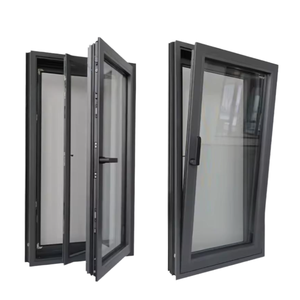
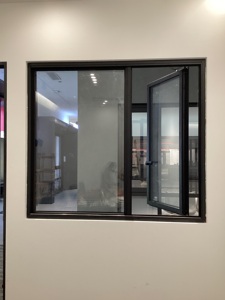
Soundproof Aluminum Casement Windows With Screens Aluminum Awning Casement Tilt And Turn windows For Residential
Send an Inquiry
Thermal Break Casement Aluminum Windows with Window Screen, Aluminium Window Awning for Houses Mosquito Net
Send an Inquiry
AS2047 CE Certified Thermal Break Aluminum Casement Window Awning Window Double Glazed Windproof Waterproof For Australian Villa
Send an Inquiry
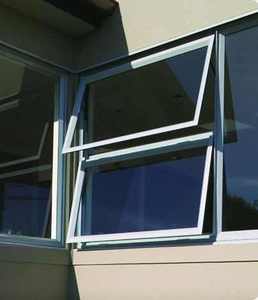
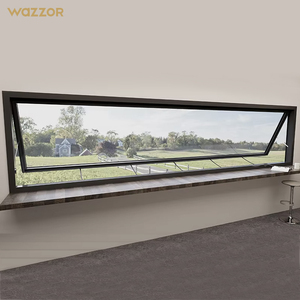
Wazzor Top-Out Awning Window Australia Standard Aluminum Glass Gas Strut Window Awning Type Building Material Awning Windows
Send an Inquiry
Thermal Break Casement Aluminum Windows With 20A Double Glazed Glass, Aluminium Window Awning For Houses Slim Frame
Send an Inquiry
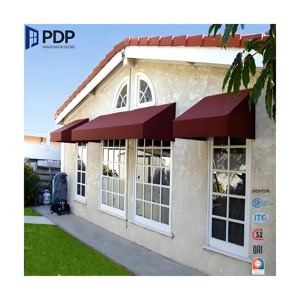
PDP Steel & Copper French Awning Window with Minimalist Design Customized Colors & Sizes Waterproof for Exterior Use
Send an Inquiry
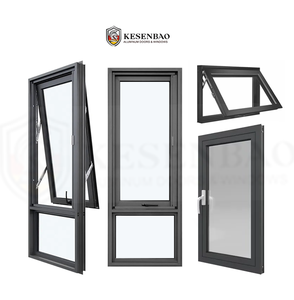
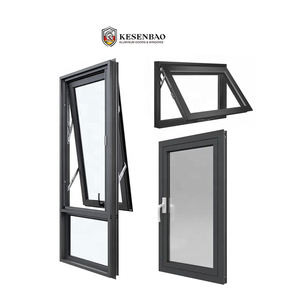
Australian AS2047 Modern Vertical Aluminum Awning Window With Stainless Steel Flyscreen For Residential & Commercial Use
Send an Inquiry
6063-T5
Primary Extrusion Alloy
0.28
Thermal U-Factor (W/m²K)
100%
Single-Source Warranty
Manufacturing Benchmark
Why Global Specifiers Partner with Our OEM Factory
As a direct manufacturer operating advanced extrusion, thermal-break joining, and CNC machining lines, we eliminate intermediary distributor markups while guaranteeing exact architectural tolerances.
Thermally Broken 6063-T5 Extrusions
Extruded strictly from virgin 6063-T5 aluminum alloy, integrated with PA66-GF25 (25% glass fiber reinforced polyamide) thermal barriers to stop thermal bridging in extreme climates.
Hurricane Impact & Wind Load Engineering
Engineered for high design pressure (DP) resistance, meeting TDI (Texas Dept. of Insurance) impact ratings and Australian AS2047 structural requirements for coastal windborne debris zones.
German Multi-Point Hardware Systems
Standardized with heavy-duty German hardware (Siegenia, Hoppe, Sobinco) and precision stainless steel ball-bearing rollers capable of carrying glass panel weights up to 400kg effortlessly.
OEM Patio Door Technical Benchmark Matrix
Detailed side-by-side performance data for commercial, high-rise, and residential OEM specifications.
| Technical Parameter |
Ultra-Slim Minimal Sliding Door |
Heavy-Duty Lift & Slide Door |
Bifold / Accordion Door System |
| Visible Interlock Sightline |
20mm - 25mm (Ultra-Slim) |
45mm - 65mm (Structural) |
55mm - 75mm (Hinged) |
| Max Panel Dimensions |
3000mm (W) × 4000mm (H) |
3200mm (W) × 3500mm (H) |
1200mm (W) × 3000mm (H) per leaf |
| Thermal Conductivity (U-Factor) |
1.4 - 1.8 W/m²K |
1.1 - 1.5 W/m²K |
1.5 - 1.9 W/m²K |
| Acoustic Insulation (STC) |
38 dB - 44 dB |
40 dB - 46 dB |
35 dB - 42 dB |
| Water Air-Tightness Standard |
Class 9A (600 Pa) |
Class E1050 (1050 Pa) |
Class 8A (450 Pa) |
| Glazing Pocket Depth |
28mm - 42mm (Double/Triple Low-E) |
32mm - 50mm (Triple Glazed/Impact) |
24mm - 36mm (Double Glazed) |
Technical Whitepaper
Engineering High-Performance OEM Patio Doors: Thermal Dynamics, Structural Integrity, and Manufacturing Precision
In modern architectural design, the demand for expansive glass openings has created a complex engineering challenge: balancing ultra-slim aesthetic sightlines with strict building envelope performance standards. As a primary Custom OEM Patio Doors Manufacturer & Supplier, our engineering division operates at the intersection of material science, structural dynamics, and precise hardware kinematics.
1. Thermal Thermodynamics and Polyamide Thermal Barrier Engineering
Aluminum is inherently a conductive material with a thermal conductivity coefficient ($\lambda$) of approximately $200 \text{ W/m}\cdot\text{K}$. To qualify aluminum patio door frames for modern energy codes such as NFRC, Title 24, and European CE standards, a structural thermal break must be integrated into the profile geometry.
We utilize precision-extruded PA66-GF25 polyamide thermal struts (25% glass fiber reinforcement) crimped tightly between interior and exterior aluminum profiles. This glass-fiber reinforced polyamide matches the coefficient of thermal expansion of aluminum ($\alpha \approx 2.3 \times 10^{-5}/\text{K}$), preventing delamination during intense thermal cycling between freezing winters and scorching summers.
- Condensation Prevention: By shifting the interior surface temperature above the dew point, localized condensation, mold cultivation, and interior drywall damage are completely prevented.
- Multi-Cavity Isothermal Design: Advanced profiles incorporate multi-chambered polyamide struts filled with expanded polyolefin (PE) insulating foam, pushing frame U-factors down to ultra-low levels ($U_f \le 1.2 \text{ W/m}^2\cdot\text{K}$).
2. Structural Load Dynamics, Wind Pressure, and Hurricane Impact Resistance
Large patio doors act as substantial sail areas under high-velocity wind events. Structural deflection ($L/175$ or $L/240$) must be meticulously controlled to prevent glass unit rupture, frame binding, or air seal failure.
Our OEM manufacturing process utilizes finite element analysis (FEA) to engineer profile wall thicknesses ranging from 2.0mm to 3.0mm in primary structural chambers. For hurricane-prone coastal regions, we offer specialized impact-rated doors featuring laminated safety glass stacks (e.g., 6mm Tempered + 1.52mm PVB/SGP Interlayer + 6mm Tempered). These assemblies pass rigorous cyclic wind pressure testing ($\pm 90 \text{ psf}$) and ASTM E1996 large missile impact criteria (9-pound $2\times4$ timber fired at 50 ft/s).
3. Kinematics and Hardware Load Distribution
The operational feel of a patio door directly defines user perception of luxury and quality. High-capacity sliding door panels weighing upwards of 400kg demand low-friction rolling assemblies. We incorporate heavy-duty tandem stainless steel rollers fitted with sealed ceramic bearings running along non-corrosive 316-grade stainless steel tracks.
In our Lift & Slide OEM series, a turn of the ergonomic handle rotates a internal gear drive mechanism that physically lifts the entire sash 6mm off the double-EPI weather seals. This releases all friction during sliding operation. When closed, the door lowers back onto the perimeter gaskets, achieving hermetic sealing against driving rain and draft infiltration.
Industry Outlook
Future Procurement & Manufacturing Trends in OEM Architectural Doors
The global window and door procurement landscape is experiencing a rapid shift driven by changing building codes, environmental legislation, and off-site modular construction practices. B2B buyers, real estate developers, and hardware importers must adapt to several defining trends shaping the OEM manufacturing sector over the next decade.
1. Shift Toward Industrialized Building Systems (IBS) and Prefabrication
On-site construction labor shortages worldwide are driving demand for factory-glazed, fully assembled window and door units. Future OEM supply chains prioritize pre-assembled frames with pre-punched installation flanges, integrated perimeter flashing membranes, and standardized clip-on trim systems that reduce field installation times by over 40%.
2. Decarbonization and Low-Carbon Aluminum Sourcing
Emboided carbon in building products is taking center stage under ESG reporting frameworks. Forward-thinking OEM suppliers are transitioning from traditional fossil-fuel-smelted aluminum to low-carbon primary aluminum produced using hydro-electric power (yielding $< 4.0 \text{ kg CO}_2\text{e per kg Al}$). Furthermore, high-grade post-consumer recycled aluminum content (up to 75%) is being integrated without sacrificing structural tensile strength.
3. Ultra-Narrow Interlocks and Frameless Glass-Corner Integration
Architectural design favors invisible boundary transitions between interior living space and exterior landscapes. The industry standard is shifting from traditional 50mm interlocks to ultra-slim 20mm interlocking sightlines reinforced internally with concealed carbon-fiber or stainless steel stiffeners. OEM factories capable of delivering structural stability within these minimalist profiles hold a distinct competitive edge.
4. Smart Home Integration and Motorized Automation
Patio door hardware is rapidly adopting smart automation. Modern OEM procurement specifications frequently require concealed brushless DC motors, sensor-actuated safety pinch prevention, and integration with home automation networks (Zigbee, Matter, Z-Wave). Automated multi-point locking mechanisms that provide high security while allowing keyless smartphone access are becoming standard in high-end developments.
Procurement Guidance
Frequently Asked Technical & Sourcing Questions
Essential insights for architects, commercial contractors, door importers, and custom home builders seeking factory-direct OEM collaboration.
What aluminum alloy grade and extrusion standards do you use for OEM patio doors?
We extrude exclusively using primary 6063-T5 architectural-grade aluminum alloy. This specific temper delivers an optimal balance of structural tensile strength ($\ge 185 \text{ MPa}$), yield strength ($\ge 145 \text{ MPa}$), and superior surface finish quality for powder coating and anodizing. All extrusions meet stringent dimensional tolerances according to EN 12020-2 and ASTM B221 standards.
Can you custom-manufacture custom profile dies based on proprietary CAD/BIM drawings?
Yes. As a dedicated OEM/ODM manufacturer, we offer complete custom die tooling services. Our engineering team converts your CAD/BIM drawings into precision extrusion dies, conducts FEA stress simulations, creates 3D printed prototypes, and produces first-article samples within 15–20 business days of die approval.
How do your patio doors perform against water penetration during heavy storms?
Our patio door systems feature a multi-stage pressure-equalized drainage design. High-profile sill tracks incorporate stepped drainage chambers with heavy-duty one-way flap valves that allow rapid water evacuation while preventing wind-driven back-drafts. Our heavy-duty systems achieve water tightness ratings up to 600 Pa – 1050 Pa (Class 9A/E1050), preventing water ingress under severe storm conditions.
What are your factory lead times for containerized B2B export shipments?
Standard custom production runs typically require 3 to 5 weeks from shop drawing sign-off and deposit receipt. For complex custom anodized or PVDF finishes, lead times range between 4 to 6 weeks. Ocean freight containerization is handled directly from our facility with heavy-duty fumigated wooden crating, corner protection, and moisture-absorbing desiccant packs.
Do your product lines comply with North American (NFRC/AAMA) and Australian (AS2047) codes?
Yes. Our flagship window and door profile series are fully tested and certified under Australian standard AS2047 (including AS1288 glass compliance) and undergo thermal modeling in accordance with NFRC 100/200 guidelines. Test reports for air infiltration, water resistance, structural deflection, and overall thermal transmittance (U-factor/SHGC) are available for submittal packages.
What surface finish options are available for coastal high-corrosion environments?
For coastal projects located within 1 mile of saltwater bodies, we recommend our marine-grade PVDF (fluorocarbon) coating or Qualicoat Class 2/Class 3 high-durability powder coatings. These specialized surface finishes resist salt spray corrosion, chalking, and intense UV degradation, passing 3,000+ hours of continuous salt spray testing under ASTM B117 standards.
Partner with a Leading OEM Patio Door Manufacturer
Whether you require custom extrusion dies, project-specific shop drawings, or factory-direct container shipments, our technical engineering desk is ready to support your project scope.
Send an Inquiry