Engineered for luxury hospitality, multi-family developments, and architectural residential projects. Direct factory specs with certified SGCC tempered glass and 6063-T5 aluminum framing.
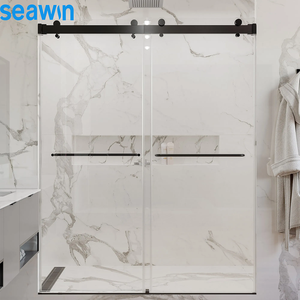
8mm–10mm SGCC Tempered Glass | Matte Black PVD Electroplated Finish | Smooth Hydraulic Roller Assembly.
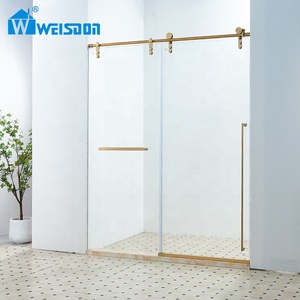
8mm SGCC Clear Safety Glass | 304 Stainless Steel Hardware | Anti-Limescale Nano-Coated Surface.
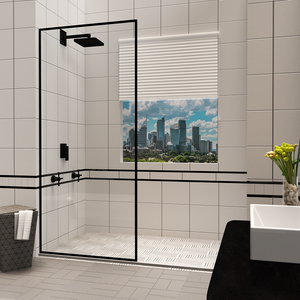
6063-T5 Thermal Break Aluminum Frame | Dual Hydrophobic Seals | Concealed Fastener System.
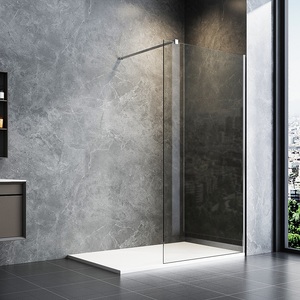
10mm Heavy Tempered Glass | Anodized Slim Profile | Vibration-Damped Wall Tie-Bar.
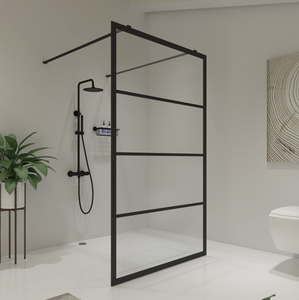
Heavy-Duty Aluminum Perimeter Frame | Impact-Resistant Safety Glass | Modular Fast Assembly.
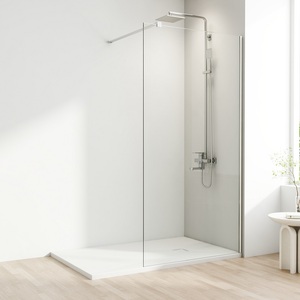
Low-Iron Optiwhite Glass | Polished Chamfered Edges | CNC Precision Corner Cutouts.
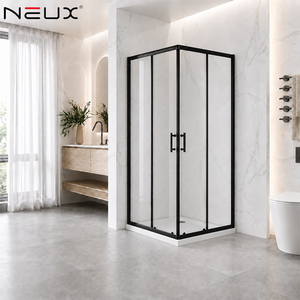
Space-Saving Dual Sliding Panels | Magnetic Water Seals | Structural Corner Stabilizer Bar.
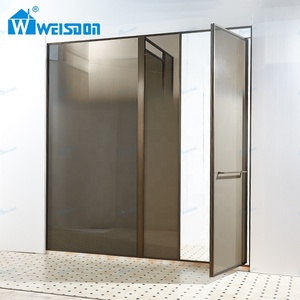
5mm+5mm SGP/PVB Laminated Safety Glass | Hydraulic Soft-Close Hinges | Brushed Bronze Finish.
Sourcing architectural shower doors at scale requires far more than comparing price per square meter. In the modern commercial real estate and hospitality construction ecosystem, procurement directors, principal architects, and wholesale buyers face a complex matrix of regulatory compliance, structural engineering, hardware metallurgy, and supply chain logistics. A single failure in glass tempering uniformity or hardware corrosion resistance can lead to catastrophic site delays, liability exposure, and ballooning warranty costs.
This whitepaper provides a authoritative evaluation framework for selecting top-tier shower doors factories. By examining advanced glass physics, structural aluminum extrusion technologies, precision CNC fabrication tolerances, and emerging eco-friendly surface coatings, we equip industry professionals with the technical intelligence needed to optimize B2B procurement strategies.
Standardizing on 6063-T5 aluminum extrusions and high-purity float glass to prevent structural deflection and spontaneous nickel sulfide inclusion breakage.
Automated laser waterjet cutting for glass cutouts, maintaining tight tolerances (±0.5mm) required for frameless sliding and pivot hardware alignment.
Rigorous compliance testing under SGCC (USA), EN 12150 (EU), and ANSI Z97.1 specifications to guarantee safety and long-term operating durability.
A granular side-by-side comparison of factory operational metrics separating world-class OEM manufacturers from low-tier assembly workshops.
| Evaluation Parameter | Tier-1 Integrated Manufacturers | Mid-Tier Regional Assemblies | Low-Cost Commodity Workshops |
|---|---|---|---|
| Tempering & Heat Treatment | Convection tempering with Heat Soak Testing (HST) to eliminate NiS inclusions. | Standard radiant tempering furnaces; limited HST capability. | Basic manual radiant furnaces; inconsistent surface tension control. |
| Hardware Coating Tech | Physical Vapor Deposition (PVD) + electroplating; >480h Salt Spray (NSS) rated. | Standard electroplating; 120h to 240h NSS salt spray rating. | Basic wet lacquer or cheap spray painting; prone to peeling within 12 months. |
| Frame Extrusion Standards | 6063-T5 virgin aluminum alloys with 15+ micron anodizing depth. | Standard 6063 aluminum; 10-12 micron powder coating layers. | Scrap-blended recycled aluminum profiles; irregular wall thicknesses. |
| Tolerance & QA Protocols | Full 3D laser coordinate inspection; ±0.5mm dimensional tolerance. | Manual caliper and gauge checking; ±1.5mm tolerance limits. | Visual spot checks only; up to ±3.0mm variance across production runs. |
| Customization (OEM/ODM) | Dedicated R&D team; CAD/BIM integration; rapid prototype 3D printing. | Standard modular catalogue modifications; fixed hardware positions. | No custom tooling; restricted exclusively to fixed off-the-shelf inventory. |
| Packaging & Crating | Honeycombed shock-absorbing foam with ISPM-15 compliant export crates. | Corrugated cardboard boxes with basic edge protectors. | Thin paper cartons without corner reinforcement; high transit damage rate. |
The operational longevity of a commercial shower door rests on two core structural pillars: Glass Processing Science and Hardware Metallurgy. As hospitality brands demand sleeker, frameless designs with minimal visual obstruction, the structural load placed on hinges, rollers, and wall anchors increases exponentially.
Key technical innovations and market shifts shaping the next decade of architectural shower enclosure sourcing.
Manual post-installation water-repellent sprays are being replaced by factory-applied, thermally cured polymer and silane nano-coatings. These chemical bonds fuse directly into the glass silica matrix, preventing hard water stains, limescale buildup, and soap scum adhesion for up to 10 years, drastically lowering hotel maintenance costs.
Premium commercial developments are standardizing soft-close sliding hardware. Hydraulic fluid dampers integrated into top tracks gently decelerate 60kg+ glass doors over the final 50mm of travel, eliminating slamming noise, preventing glass edge impact stress, and improving user safety in luxury suites.
Off-site modular construction is accelerating globally. Leading shower door factories now manufacture pre-tested modular enclosure kits with tight dimensional tolerances (within ±0.5mm), allowing rapid click-and-lock assembly inside off-site prefabricated bathroom pods prior to job-site delivery.
Procurement teams should verify that prospective shower door suppliers enforce a multi-stage Quality Control (QC) protocol before signing mass manufacturing agreements.
Audit spectrographic analysis reports for aluminum ingot purity (6063 alloy verification) and ensure float glass batches are free from heavy seeds, bubbles, or inclusions.
Utilize differential surface refractometers (GASP) to measure compressive stress levels (must exceed 69 MPa). Perform periodic fragmentation tests (minimum 40 fragments per 50x50mm area).
Verify pneumatic fatigue testing rigs running hardware through 50,000 to 100,000 open/close cycles without mechanical failure, alongside 480-hour neutral salt-spray chamber testing.
Require full-scale dry assembly of 1% to 3% of every production batch to verify hole alignment, door sweep clearance, magnetic seal engagement, and packaging crate rigidity.
Royal Windoor operates at the intersection of custom engineering precision and high-volume manufacturing efficiency. Backed by three decades of family leadership and rigorous engineering discipline, our integrated manufacturing and installation infrastructure eliminates split liability and third-party markup for commercial builders, developers, and international distributors.
We design, extrude, glaze, and fit our systems under a unified factory warranty, ensuring complete alignment between structural shop drawings and finished installations.
Laser site surveys capture exact wall plumb and threshold slope after tile installation, preventing water leaks caused by out-of-square room geometry.
Crated with shock-resistant interlayers and reinforced ISPM-15 wooden frames, our products ship safely to jobsites nationwide and across international ports.
Expert answers to the most common questions raised by architects, specification engineers, and B2B procurement heads.
For North American projects, glass components must carry the SGCC (Safety Glass Certification Council) mark and strictly comply with ANSI Z97.1-2015 standards. European import orders require compliance with EN 12150-1 (Thermally toughened soda lime silicate safety glass). These certifications ensure the glass has undergone rigorous surface compression testing, ball-impact testing, and fragment density verification to prevent injury in the event of failure.
Spontaneous breakage is primarily caused by microscopic Nickel Sulfide (NiS) inclusions expanding over time inside tempered glass. Top-tier factories mitigate this risk by using high-purity float glass substrate and subjecting finished tempered panels to a thermal Heat Soak Test (HST) according to EN 14179 standards. HST heats the glass to 290°C for several hours, forcing panels with NiS inclusions to break inside the controlled factory environment rather than after installation.
8mm Tempered Glass is ideal for standard framed or semi-frameless sliding enclosures, offering lightweight operation and excellent durability. 10mm Tempered Glass is the gold standard for frameless installations, delivering high rigidity and minimal deflection under heavy hand-pressure. 5+5mm Laminated Safety Glass features an embedded acoustic PVB or structural SGP interlayer that keeps fragments adhered together even if cracked, making it the preferred choice for high-end luxury hotels and high-occupancy commercial properties.
High-quality hardware undergoes Neutral Salt Spray (NSS) testing under ASTM B117 or ISO 9227 standards. Superior factory finishes—such as Physical Vapor Deposition (PVD) matte black or brushed gold—are rated for 480 hours of continuous salt fog exposure without blistering, pitting, or color fading. This ensures long-term resistance against high ambient humidity, hard water minerals, and acidic bathroom cleaners.
Standard factory lead times range from 2 to 4 weeks for standard catalog inventory and 4 to 8 weeks for custom thermally broken aluminum frames, specialized PVD hardware finishes, or custom laminated glass build-ups. MOQs vary depending on the tier: standard modular sliding units may require a minimum of 20 to 50 sets per run, while dedicated custom OEM project orders for hotels or high-density residential towers are tailored to project schedules with containerized consolidation options.
Yes. Premium manufacturing systems feature adjustable wall profiles with built-in out-of-plumb adjustment margins (typically up to 15mm to 25mm per side) without compromising seal integrity. For fully frameless architectural designs, panels are custom CNC laser-cut after site measurement to match out-of-square wall angles and sloping thresholds precisely.
Submit your architectural drawings, opening schedules, or OEM specifications to our engineering team. We provide complete shop drawings, performance metrics, and factory-direct volume pricing within 24 business hours.