Explore our premium architectural window, awning, skylight, and storefront glass solutions manufactured to rigorous global standards including AS2047, CE, and TDI hurricane specifications.
A technical engineering breakdown on evaluating alloy tempers, thermal barrier structural integrity, certified window ratings, and global procurement logistics for commercial projects.
When general contractors, real estate developers, and facade engineering consultants evaluate China storefront glass manufacturers and exporters, the focus must extend beyond unit cost per square meter. Commercial facade integrity relies on structural deflection limits (L/175 or L/240 under design pressure), thermal envelope performance (U-factor & SHGC), and long-term air/water infiltration resistance.
Premier manufacturing facilities utilize 6063-T5 aluminum extrusions featuring minimum wall thicknesses of 2.0mm to 3.0mm for commercial storefront frames. Low-tier non-thermal aluminum profiles allow rapid thermal bridging, leading to interior condensation, mold growth, and HVAC operational inefficiencies in high-humidity zones.
High-performance storefront systems specified for Western markets rely on crimped Polyamide PA66-GF25 (25% glass fiber reinforced) thermal break strips. Unlike poured polyurethane breaks which can degrade or shear under high wind loads, PA66-GF25 strips match the thermal expansion coefficient of aluminum, ensuring mechanical integrity under cyclical thermal stress (-30°C to +80°C).
Before issuing requests for proposals (RFPs), specify exact structural and thermal metrics across product lines:
| Performance Benchmark | Architectural Premium (Thermally Broken) | Standard Commercial Storefront | Impact / Hurricane Rated (TDI Spec) |
|---|---|---|---|
| Aluminum Alloy & Temper | 6063-T5 / T6 (Tensile Strength ≥ 205 MPa) | 6063-T5 (Standard Extrusion) | High-Tensile 6063-T6 Heavy-Wall Profile |
| Thermal Barrier Type | 24mm–34mm PA66-GF25 Polyamide Strips | Monolithic / 14mm Standard Thermal Break | Reinforced Structural Thermal Barrier |
| Glazing Configuration | Double/Triple IGU (6mm Low-E + 16A/20A + 6mm) | Double Glazed (5mm + 12A + 5mm) | Laminated Impact Glass (6mm + 1.52 PVB/SGP + 6mm) |
| Global Certification | AS2047 (AU), CE (EU), NFRC (US) | ISO9001, GB/T 8478 | TDI Listed, ASTM E1886/E1996 Large Missile |
| Air / Water / Wind Load | Water: 600 Pa | Wind Pressure: ±4000 Pa | Water: 300 Pa | Wind Pressure: ±2000 Pa | Water: 720 Pa | Design Pressure: ±70 PSF |
| Hardware Integration | German Siegenia / Hopo Multi-Point Locking | Standard Friction Hinges / Surface Locks | Heavy-Duty Stainless 304/316 Security Hardware |
Combining 30 years of direct fabrication expertise with factory-direct control, offering custom fenestration engineered from raw extrusion to direct site delivery.
Subcontracting glass to one vendor, extrusions to another, and installation to a third creates warranty disputes. Royal Windoor designs, extrudes, glazes, and inspects each unit under a single ISO-certified factory umbrella.
Our TDI-listed and AS2047-tested IMPACT series utilize heavy laminated build-ups engineered for high design pressure zones, coastal salt-air exposure, and cyclic loading requirements.
Units ship in heavy-duty A-frame steel or reinforced wooden crates with desiccated shrink-wrap protection, preventing glass breakage and frame oxidation during oceanic transit.
As international energy codes (Title 24, ASHRAE 90.1, NCC Australia) tighten, China storefront glass manufacturers are advancing next-generation architectural technologies.
Architects are shifting away from heavy 50mm perimeter frames toward ultra-slim vertical interlocks measuring 20mm to 35mm. Achieving structural integrity with minimal sightlines requires high-moment-of-inertia aluminum profiles reinforced with internal steel chambers and high-modulus structural silicone sealants (e.g., Dow Corning 983).
Building-Integrated Photovoltaics (BIPV) are expanding from luxury high-rises to retail storefronts. Exporters are embedding micro-solar cells and electrochromic Smart Glass layers within standard double-glazed IGUs. This enables storefront glass to dynamically adjust SHGC from 0.45 down to 0.09 under direct sunlight while generating renewable energy for building operations.
Cold-climate commercial projects are increasingly mandating U-factors below 0.22 BTU/h·ft²·°F (1.25 W/m²K). To achieve this, modern production lines incorporate triple-pane IGUs featuring dual Low-E coatings (e.g., Sungate 400 / Solarban 60), 90%+ Argon gas fills, and warm-edge composite spacers (Swisspacer / Technoform).
Leading Western developers now require environmental product declarations (EPDs) tracking embodied carbon. Leading Chinese extruders are utilizing green hydro-powered smelters and primary scrap alloy loops to produce 6063-T5 profiles with carbon footprints below 4.0 kg CO2e per kg aluminum, assisting buyers in meeting LEED v4.1 certification.
Essential answers for general contractors, architectural buyers, and importers sourcing storefront glass systems from Chinese exporters.
Reputable exporters submit production line samples to accredited third-party testing facilities such as NATA-accredited labs in Australia or Intertek/AZON in North America. Test reports verify air infiltration (AS4420.2), water penetration resistance (AS4420.3), ultimate strength deflection (AS4420.6), and thermal U-factors via NFRC 100/200 simulations. Always request factory shop drawings backed by certified test report numbers before issuing purchase orders.
Standard architectural extrusions in stock finishes (anodized clear/bronze, standard black powder coat) require 2 to 4 weeks for fabrication and factory glazing. Fully custom thermal break profiles, specialized PVB/SGP laminated hurricane glass, or custom RAL powder coating colors require 4 to 6 weeks. Ocean freight delivery to North American or Australian ports typically adds 2 to 4 weeks.
Export-grade window and glass units are packed in closed steel-reinforced wooden cases or heavy-duty A-frame pallets. Individual glass panels are separated by cork spacer blocks, corner guards, and wrapped in heavy poly-shrink film with silica gel moisture absorbers to eliminate oceanic humidity fogging and thermal shock breakage.
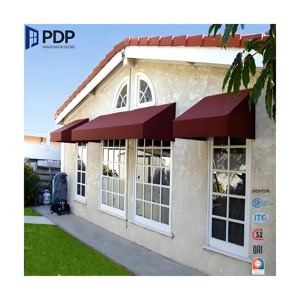
Thermally broken 6063-T5 aluminum offers the optimal ratio of weight, structural strength, corrosion resistance, and thermal insulation per dollar. Custom steel fenestration (such as PDP French awning profiles) is recommended when extremely thin heritage sightlines or ultra-high structural spans are mandated, though unit costs are higher than aluminum.
Direct factory exporters provide a complete shipping packet: Commercial Invoice, Packing List with crating marks, Bill of Lading (BOL), Certificate of Origin (CO), Factory QA Inspection Certificate, and Glass Tempering Calibration Certificates. For US destination ports, ISF filings are submitted 24 hours prior to container vessel loading.
Submit your commercial fenestration schedules, project elevations, or tender requirements. Our engineering team will review structural wind loads, U-factor requirements, and provide turnkey FOB/CIF pricing within 24 hours.