Specifically engineered to satisfy stringent sound insulation requirements ($R_w$ ratings up to 48 dB+) and thermal efficiency mandates ($U_w \le 0.8\text{ W/m}^2\text{K}$) across the Swiss Confederation.
Navigating the stringent fenestration requirements of the Swiss construction market requires an advanced understanding of environmental acoustics, thermal dynamics, and structural engineering. In Switzerland, urban density, transit network expansion (SBB rail corridors and arterial highways), and high-altitude Alpine meteorological shifts demand building envelopes capable of exceptional isolation. As specialized premier acoustic windows suppliers and exporters for Switzerland, our manufacturing ethos centers on bridging international trade logistics with uncompromising Swiss engineering compliance—specifically meeting standard SIA 181 (Schallschutz im Hochbau) and SIA 380/1 (Thermische Energie im Hochbau).
Standard double glazing fails in acoustic isolation due to coincidental resonance frequency matching—where inner and outer glass panes vibrate in sympathy, allowing noise energy to pass through unabated. Our engineered acoustic window systems utilize asymmetrical pane thickness combinations (e.g., 8mm toughened outer glass paired with a 6mm inner pane separated by a 16mm or 20mm argon-filled acoustic gas cavity). By varying the mass and stiffness of each pane, we break the coincidental frequency band.
Furthermore, our glass configurations integrate specialized viscoelastic Polyvinyl Butyral (PVB) acoustic interlayers. Unlike standard structural PVB, acoustic PVB acts as a shear-damping core that converts acoustic sound wave energy into microscopic heat energy. This delivers verified Sound Reduction Index ($R_w$) values ranging from 38 dB to over 48 dB, effectively attenuating low-frequency city traffic noise, aircraft movement near Zurich Airport (ZRH) or Geneva Airport (GVA), and high-frequency rail squeal.
In Swiss fenestration, acoustic isolation cannot come at the expense of thermal efficiency. Our custom aluminum window extrusions utilize high-density **6063-T5 structural aluminum alloy** embedded with **Technoform polyamide (PA66GF25) thermal breaks** spanning 24mm to 34mm in depth. This mechanical thermal bridge prevents condensation formation during severe sub-zero Swiss winters while locking indoor thermal energy within the building envelope to comply with Minergie and Minergie-P energy standards.
Each canton and topographical zone in Switzerland presents distinct acoustic and environmental challenges. We supply custom fenestration engineered specifically for regional performance profiles.
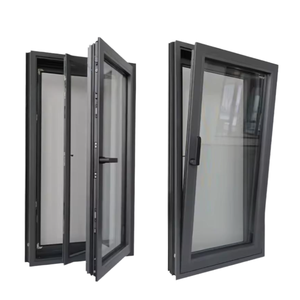
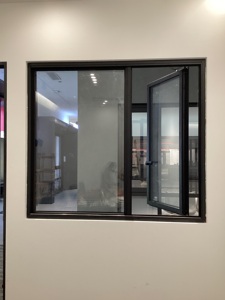
In dense metropolitan zones suffering from tram lines, street traffic, and commercial nightlife, our tilt-and-turn windows provide up to 45 dB $R_w + C_{tr}$ noise attenuation. Micro-ventilation modes allow continuous air exchange while maintaining perimeter acoustic sealing.
High-altitude projects in Zermatt, St. Moritz, or Verbier demand extreme resistance to wind loads, thermal stress, and intense wind noise. Our heavy-duty thermal break casements incorporate continuous EPDM triple-gasket seals that eliminate draft noises and thermal loss.
Properties adjacent to Swiss Federal Railways (SBB) infrastructure encounter aggressive low-frequency ground vibration and airborne sound pressure. We supply heavy acoustic laminate glass matrices optimized specifically for low-frequency spectrum adaptation ($C_{tr}$).
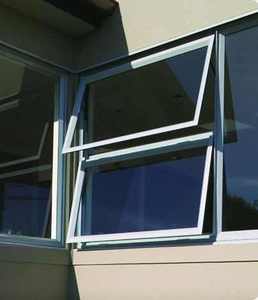
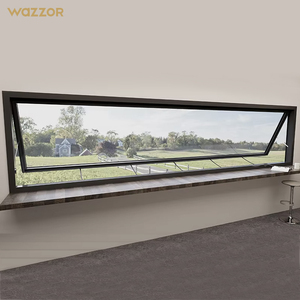
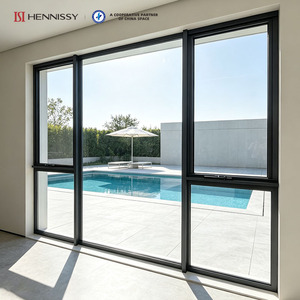
Lakefront estates in Lugano and Locarno require expansive glass elevations paired with solar radiation control and humidity resistance. Our minimal-frame gas-strut awning and sliding windows deliver unobstructed views with marine-grade anodized anti-corrosion finishes.
Swiss pharmaceutical complexes and cleanrooms require tightly controlled interior environments protected from external ambient noise pollution. Our certified structural aluminum systems guarantee zero air leakage (Class 4 EN 12207).
Quantifiable engineering parameters validated under EN ISO 10140-2 (Acoustics) and EN ISO 10077-2 (Thermal performance).
| System Configuration | Sound Isolation ($R_w + C_{tr}$) | Thermal Transmittance ($U_w$) | Air Permeability | Swiss Regulatory Alignment |
|---|---|---|---|---|
| Triple-Glazed Heavy Acoustic Casement | 46 – 50 dB | 0.75 – 0.82 W/m²K | Class 4 (EN 12207) | SIA 181 / Minergie-P Standard |
| Tilt & Turn Thermal Break Aluminium | 42 – 45 dB | 0.88 – 1.05 W/m²K | Class 4 (EN 12207) | SIA 181 City Zone Standard |
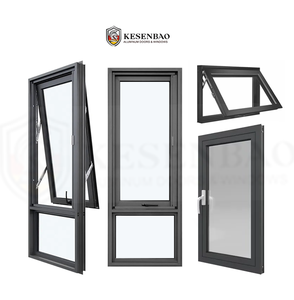
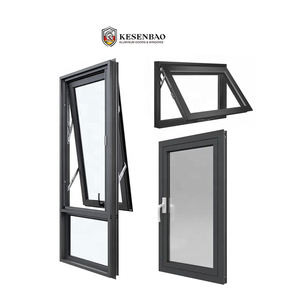
| Gas-Strut Top-Out Awning Window | 38 – 42 dB | 1.10 – 1.25 W/m²K | Class 3 (EN 12207) | SIA 380/1 Commercial Standard |
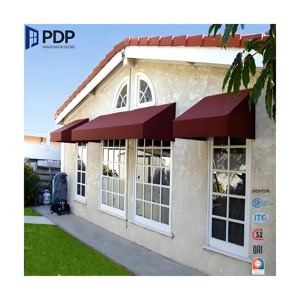
| PDP Minimalist Steel & Copper Awning | 40 – 44 dB | 1.02 – 1.18 W/m²K | Class 4 (EN 12207) | Heritage Protection / Luxury Villa |
| Fixed Acoustic Skylight / Roof Window | 44 – 48 dB | 0.80 – 0.95 W/m²K | Class 4 (EN 12207) | SIA 181 High-Altitude Roof Standard |
The Swiss Federal Office for the Environment (FOEN / BAFU) has intensified enforcement of noise exposure limits across municipal zones. Building permits for new residential developments and urban infill projects are increasingly contingent upon verified acoustic window calculations prior to groundbreaking. Exporters must provide detailed third-party laboratory test reports validating $R_w$ and $C_{tr}$ spectra.
Architectural trends in Zurich, Zug, and Lucerne heavily favor ultra-slim outer frame profiles that maximize natural daylight intake. Achieving structural stability and acoustic isolation within slim profiles requires structural glass bonding (silicone structural glazing - SSG) and high-modulus 6063-T5 aluminum framing engineered to support triple-laminated IGU weights exceeding 80 kg per square meter.
Swiss general contractors and real estate institutional investors demand complete material traceability. Our aluminum extrusions utilize high percentages of recycled aluminum billet, combined with non-toxic, lead-free EPDM gaskets and fluorocarbon (PVDF) eco-friendly powder coatings that withstand high UV exposure on Alpine elevations without chalking or degradation.
As an established manufacturer with over 30 years of specialized fenestration expertise, we eliminate the complexity of sourcing premium acoustic window systems internationally.
We provide streamlined logistics execution including DDP (Delivered Duty Paid) or CIF delivery terms to major Swiss logistics centers including Basel Rhine Ports, Zurich Cargo Hub, and inland regional depots.
Our windows undergo acoustic testing according to ISO 10140-2 standards. We configure glass build-ups (varying pane thickness, asymmetric air gaps, and acoustic PVB layers) to match the specific noise spectrum ($R_w$, $C$, and $C_{tr}$) mandated by SIA 181 based on your site's environmental noise exposure category.
We supply complete export documentation tailored for Swiss customs (Federal Customs and Border Security FDBZ). This includes EUR.1 movement certificates, detailed commercial invoices with exact HS Codes (8302.41 / 7610.10), packing lists, CE declarations of performance, and ISPM 15 timber heat-treatment certificates.
Yes. By combining 34mm multi-cavity polyamide thermal breaks, triple-glazed low-E glass units with warm-edge spacers (such as Technoform or Swisspacer), and argon gas fills (90%+ concentration), our window assemblies achieve total thermal transmittance ($U_w$) as low as $0.75\text{ W/m}^2\text{K}$.
The continuous polyamide thermal break completely decouples the interior aluminum sash and frame from the cold exterior profile. Combined with continuous EPDM center gasket lines, the inner surface temperature remains close to room temperature, keeping the dew point above threshold levels and preventing condensation accumulation.
Standard custom production requires 3 to 4 weeks following final shop drawing approval. Express ocean freight or rail transit to European logistics hubs takes approximately 2 to 3 weeks, yielding a typical door-to-site timeline of 5 to 7 weeks for custom cantonal projects.
All export fenestration packages carry a comprehensive 10-year factory warranty covering aluminum structural frame integrity, anodized/powder-coated surface finishes, and insulated glass unit seal failure, alongside a 5-year warranty on all mechanical German hardware components.
Contact our engineering department to review your project elevation drawings, perform acoustic attenuation calculations, and receive a factory-direct quotation tailored to Swiss site requirements.