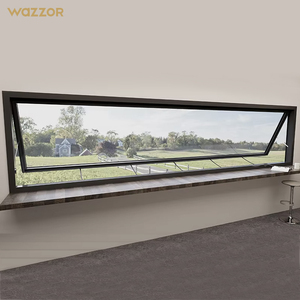
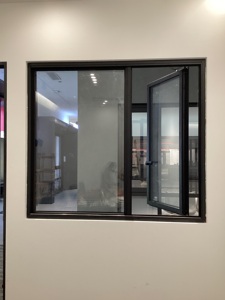
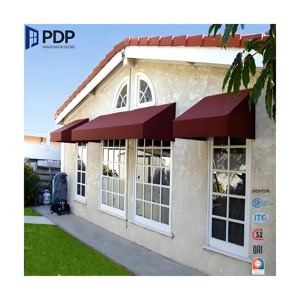
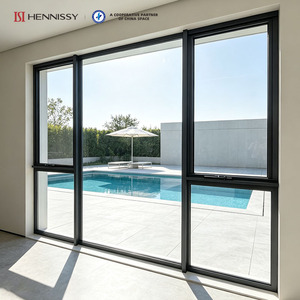
Curated architectural sliding, awning, casement, and tilt-and-turn windows engineered with thermal breaks, multi-point locking gear, and high-density EPDM weather sealing.
A comprehensive analysis of thermal resistance, structural load design, and metallurgical precision required under the Korean Building Energy Code (KS F 2278 / KS F 3117).
South Korea enforces stringent regional thermal performance codes. In Zone 1 (Central regions like Seoul and Gyeonggi), external fenestration must meet U-factors under 0.9 to 1.2 W/m²·K for residential buildings. Our specialized thermal break aluminum profiles utilize multi-cavity PA66GF25 polyamide insulation strips, achieving overall system U-values as low as 0.78 W/m²·K when paired with argon-filled triple Low-E glazing.
Coastal urban centers such as Busan, Incheon, and Jeju Island face severe summer typhoons featuring wind gusts exceeding 45 m/s. Our sliding and lift-and-slide profiles are constructed from high-tensile 6063-T6 aluminum extrusion alloys with wall thicknesses ranging between 2.0mm and 3.0mm, tested to resist positive and negative design pressures of up to 4,500 Pa (KS F 2296 Wind Pressure Standard).
Through precision CNC miter joints, continuous vulcanized EPDM seals, and stepped drainage channels, our sliding systems achieve Grade 1 Air Tightness (KS F 2292) and maximum water tightness resistance (>700 Pa under KS F 2293). This prevents wind-driven rain penetration during seasonal East Asian monsoons (Jangma).
| Performance Indicator | Legacy Korean uPVC Windows | Standard Non-Thermal Aluminum | Our OEM Thermally Broken Aluminum (KS Spec) |
|---|---|---|---|
| System Thermal Transmittance (U-Value) | 1.4 – 1.8 W/m²·K | 2.8 – 3.5 W/m²·K (Poor) | 0.78 – 1.1 W/m²·K (Superior) |
| Structural Frame Thickness | 2.5mm – 3.0mm Vinyl Profile | 1.2mm – 1.4mm Soft Aluminum | 2.0mm – 3.2mm Architectural 6063-T6 |
| Sightline Sleekness & Maximum Panel Size | Bulky frames; limited panel weights (<150kg) | Moderate frame; prone to flex | Ultra-slim sightlines; panel load up to 400kg |
| Wind Load Resistance (Pa) | 2,000 – 2,800 Pa | 1,800 – 2,500 Pa | 3,800 – 4,800 Pa (Typhoon Grade) |
| Surface Coating & Weatherability | Prone to UV yellowing & degradation | Standard anodizing | AkzoNobel PVDF Fluorocarbon (25+ Yr Warranty) |
| Hardware Integration | Basic sliding gear | Single latch systems | German Siegenia / HOPPE Lift-Slide Multi-Point |
Different Korean geographic zones demand custom-engineered sliding and system windows tailored to microclimatic stress, architectural style, and municipal building codes.
In dense metropolitan developments like Gangnam, Mapo, and Songdo New City, residential towers require maximum daylighting paired with superior acoustic dampening to shield against urban noise pollution. Our slim-frame heavy-duty horizontal sliding and lift-and-slide windows support floor-to-ceiling glass dimensions up to 3.2 meters in height. Featuring triple-layer acoustic laminated glass (STC 42+ dB), these systems eliminate urban street noise while exceeding Seoul’s strict zero-energy apartment energy metrics.
Coastal developments facing the East Sea and West Sea deal with high atmospheric salt content (chloride attack) and violent windstorms. We supply custom coastal sliding window systems engineered with marine-grade C5-M PVDF fluorocarbon coatings and 316 stainless steel hardware components. Reinforced internal stainless steel rollers and double-locking lift-slide mechanisms guarantee effortless sliding operation even after years of relentless sea breeze exposure.
Winter temperatures in Gangwon-do (Pyeongchang, Chuncheon) routinely dip below -20°C. Legacy windows suffer heavy frame sweating, seal failure, and massive heating loss. Our custom exported thermal break sliding windows integrate 34mm wide multi-cavity polyamide thermal breaks, warm-edge TGI spacers, and argon-gas filled triple pane Low-E units (6mm+16Ar+6mm+16Ar+6mm). This cuts thermal bridging down to virtual zero and completely eliminates internal window condensation.
Understanding the transition from traditional uPVC white plastic frames to high-performance architectural aluminum system windows across Korea's commercial and residential landscape.
Historically, Korean housing developments favored domestic white uPVC vinyl windows due to initial low costs. However, modern Korean architects and tier-1 construction firms (such as Hyundai E&C, GS E&C, and DL E&C) are rapidly migrating to aluminum system windows. Aluminum provides structural rigidity for massive glass openings, sleeker sightlines, fire safety compliance, and custom anodized or powder-coated color palettes (Matte Black, Dark Metallic Gray, Champagne Gold) that complement modern Korean interior aesthetics.
The South Korean Ministry of Land, Infrastructure and Transport (MOLIT) has expanded mandatory Zero Energy Building (ZEB) certification to all private residential buildings over 30 units. Window systems are the single most critical building envelope element evaluated. Exporting to Korea requires verified thermal performance data, pressure testing, and factory audit capabilities that Chinese top-tier exporters are uniquely positioned to provide at scale.
Traditional sliding windows suffer air leaks along track sweeps. The Korean market is increasingly adopting Lift-and-Slide (LS) technology. When turned, the handle lifts the sash off the track gasket, allowing effortless glide for heavy 300kg triple-pane sashes. When closed, the sash drops into place, compressing continuous EPDM gaskets tightly against the frame to achieve complete airtightness comparable to fixed architectural windows.
Integrating world-class raw aluminum extrusions, automated German fabrication machinery, and streamlined maritime shipping to Incheon, Busan, and Pyeongtaek ports.
We operate 18 extrusion presses utilizing 100% pure 6063 primary aluminum billets (avoiding recycled scrap metal). Our precise T5 and T6 heat treatment processes ensure uniform grain structures, high flexural strength, and superior surface finishing ideal for anodizing and PVDF spraying.
All frame cutting, hardware milling, corner crimping, and thermal strip insertion are executed using fully automated Elumatec CNC machining lines. This guarantees dimensional tolerances within ±0.5mm—essential for smooth field installation in Korean modular precast and curtain wall facades.
Located near major ocean shipping hubs, we offer direct containerized shipping to Incheon, Busan, and Pyeongtaek ports within 3 to 7 days transit time. Every shipment is packaged in fumigated plywood crates with moisture barrier protection, corner guards, and labeled CAD installation guides.
Expert guidance covering testing standards, customs compliance, lead times, and structural customization for Korean architectural projects.
A: Our export engineering team designs window profiles specifically to meet or exceed Korean Standard specifications. We fabricate using 6063-T5 aluminum extrusions, PA66GF25 thermal breaks, and low-emissivity glass build-ups. We provide factory test reports for U-factor (KS F 2278), air tightness (KS F 2292), water tightness (KS F 2293), and wind resistance (KS F 2296) to assist Korean buyers with local municipal building compliance and inspection passing.
A: Standard customized orders take approximately 3 to 4 weeks for factory extruding, powder coating, assembly, and glass glazing. Shipping from our port to major South Korean ports (Incheon, Busan, Pyeongtaek) takes only 3 to 5 ocean days. Total door-to-port timeline generally ranges between 25 and 35 calendar days.
A: Yes. We offer a full spectrum of architectural surface treatments including PVDF (fluorocarbon coating using AkzoNobel or PPG paints), hard-anodizing in champagne, black, bronze, and matte silver, as well as eco-friendly powder coating. All coatings are applied to withstand harsh coastal salt-mist environments (C5-M corrosion rating) with 20 to 25-year anti-fading performance warranties.
A: We partner with top-tier international and premium domestic hardware manufacturers. Standard options include German Siegenia, ROTO, HOPPE, and G-U multi-point locking gear, engineered to withstand heavy sash loads (up to 400 kg for large lift-and-slide doors) and ensure ultra-smooth operating effort under 20 N.
A: We offer both flexible supply modes. We can export fully factory-glazed windows pre-assembled with double/triple LOW-E argon units ready for direct job-site drop, or export knockdown (KD) unglazed frames with complete rubber gaskets and hardware kits if you prefer sourcing glass domestically in Korea.
A: Each individual window sash and frame is wrapped in protective PE protective film, wrapped in shock-absorbing foam, and encased in custom solid fumigated plywood crates with internal steel strapping. We guarantee 0% shipping breakage and include spare hardware hardware accessories in every container.
Whether you are specifying for a high-rise residential project in Seoul, a coastal resort in Busan, or seeking factory-direct distribution pricing across South Korea, our engineering team delivers precision shop drawings, KS-compliant specs, and competitive FOB/CIF quotes within 24 hours.