Precision-engineered aluminum profiles, AS2047/CE certified insulated glass units, and heavy-duty hardware built for extreme climatic versatility across Mexico.
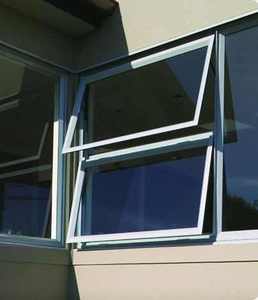
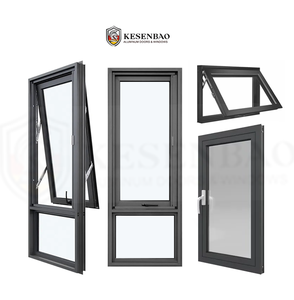
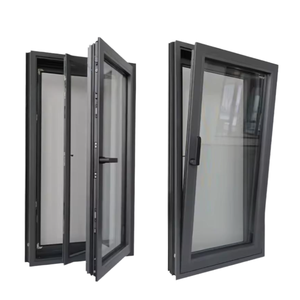
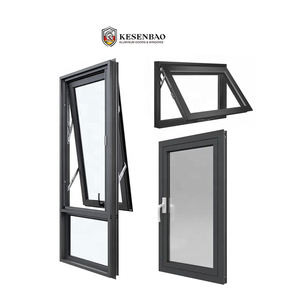
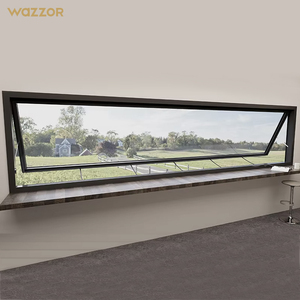
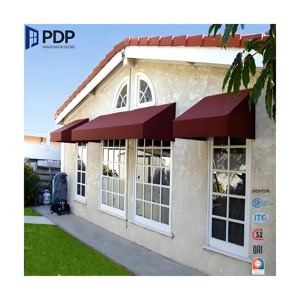
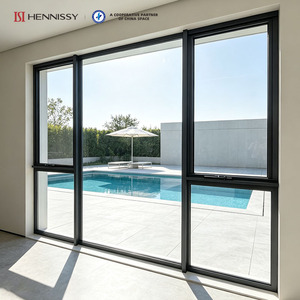
Mexico's commercial, industrial, and luxury residential real estate markets are experiencing unprecedented growth. Driven by the massive nearshoring paradigm shift in Northern hubs such as Monterrey, Saltillo, and Tijuana, alongside the booming hospitality corridors of Cancún, Los Cabos, and the Riviera Maya, the demand for high-performance architectural glass and structural fenestration has reached historic highs. Developers, general contractors, and facade engineers across Mexico face a critical challenge: securing high-specification architectural glazing systems that meet strict international structural codes while maintaining cost efficiency and reliable project lead times.
As an authoritative OEM/ODM manufacturer headquartered in China with over three decades of advanced extrusion, tempering, and IGUs (Insulating Glass Units) fabrication experience, our enterprise acts as a direct wholesale bridge. We engineer and export complete structural glazing packages—ranging from thermally broken aluminum casements and minimal sliding glass walls to unitized curtain wall facades—directly from our manufacturing facility to key Mexican ports including Manzanillo, Lázaro Cárdenas, and Veracruz.
Specifying architectural glass in Mexico requires navigating radically diverse microclimates. A standardized single-pane or non-thermally broken system installed in Mexico City will fail from a thermal management perspective in Monterrey or suffer structural degradation in the coastal hurricane zones of Quintana Roo. Direct factory customization allows glass build-ups and profile wall thicknesses to be precisely engineered for regional conditions:
Modern architectural glass is no longer a passive barrier; it is an engineered active building envelope component. Our direct-export glass units utilize primary float glass sourced from top-tier global manufacturers, processed in automated cleanrooms equipped with CNC cutting, edgework, forced-convection tempering furnaces, and dual-seal insulating glass assembly lines.
Below is an authoritative technical specification matrix representing the export glass configurations supplied to Mexican commercial developments:
| Glass Configuration Type | Visible Light Transmittance (VLT) | Solar Heat Gain Coeff. (SHGC) | U-Factor (W/m²·K / BTU) | Acoustic Rating (STC) | Primary Regional Target in Mexico |
|---|---|---|---|---|---|
| 6mm Low-E + 12A + 6mm Clear Double IGU | 68% | 0.38 | 1.6 W/m²·K (0.28 BTU) | 34 dB | Central Highlands (CDMX, Querétaro, Puebla) |
| 6mm Triple Silver Low-E + 16A Argon + 6mm Clear | 52% | 0.23 | 1.1 W/m²·K (0.19 BTU) | 37 dB | Northern Nearshoring Parks (Monterrey, Chihuahua) |
| 8mm Tempered + 1.52 SGP + 8mm Tempered Hurricane Laminate | 74% | 0.51 | 2.8 W/m²·K (0.49 BTU) | 42 dB | Coastal Resorts (Cancún, Cozumel, Los Cabos) |
| 6mm Tinted Low-E + 12A + 6.38mm Laminated Acoustic IGU | 45% | 0.28 | 1.4 W/m²·K (0.24 BTU) | 44 dB | Urban Luxury High-Rises & Airport Zones |
The structural integrity of fenestration systems exported to Mexico relies on high-grade aluminum extrusions. We use exclusively virgin 6063-T5 and 6063-T6 architectural aluminum alloys. Unlike scrap-recycled aluminum profile alternatives, virgin 6063-T5 ensures precise wall tolerances (minimum 1.4mm for residential casements, 2.0mm to 3.0mm for heavy commercial sliding walls and curtain walls) and superior tensile strength.
Our thermal break systems utilize imported PA66-GF25 (Polyamide 66 reinforced with 25% glass fiber) thermal barrier strips. Mechanical crimping of PA66 strips isolates the exterior aluminum section from the interior section, breaking the thermal conduction path. This process effectively prevents thermal bridging, eliminates interior frame condensation during humid Mexican summers, and dramatically boosts overall envelope energy performance.
Understanding the exact application context ensures that structural engineers, developers, and architects order fenestration systems tailored to structural loads and operational demands.
Locations: Monterrey (Santa Catarina, Apodaca), Saltillo, Querétaro, San Luis Potosí.
Class-A office spaces and industrial control centers require large-format unitized glass curtain walls and thermal break tilt-and-turn windows. Our 20A double-glazed units deliver extreme thermal isolation, drastically reducing peak electricity bills driven by industrial HVAC units operating under 40°C heat spikes.
Locations: Valle de Bravo, San Miguel de Allende, Zapopan (Guadalajara), CDMX (Polanco, Santa Fe).
Ultra-slim profile minimal sliding doors with flush sill transitions seamlessly merge indoor living spaces with outdoor terraces. Incorporating multi-point German hardware (ROTO/SIEGENIA) and electric motorized roof awnings guarantees smooth operation for heavy glass panels up to 400 kg per sash.
Locations: Cancún Hotel Zone, Riviera Maya, Tulum, Cabo San Lucas, Punta Mita.
Developments in high-corrosion, hurricane-prone regions mandate SGP-laminated impact glass engineered to withstand missile impacts and wind loads exceeding 3500 Pa. Profiles undergo specialized 25-micron anodization or Qualicoat Class 2 powder coating to eliminate salt-spray pitting and surface oxidation.
Locations: Puebla, Mérida, Tijuana, León.
Replacing single-pane legacy windows with modern AS2047 soundproof casements and awnings with integrated stainless steel flyscreens. Provides vital acoustic isolation from dense city traffic noise while keeping insects out in sub-tropical zones.
The Mexican construction industry is undergoing a structural transition toward environmental certification. Major institutional funds, REITs (FIBRAs like FIBRA Uno, FIBRA Macquarie), and commercial developers actively seek international sustainability credentials. Importing engineered glass systems directly aligns with these requirements:
The Official Mexican Standards (*Normas Oficiales Mexicanas*) enforce strict thermal envelope limits for non-residential building facades. NOM-008-ENER-2001 calculates the overall heat gain budget through building envelopes. Utilizing our double and triple Low-E insulated glass units reduces overall solar heat gain by up to 60%, empowering architects to easily pass municipal energy audits and achieve construction permits across major Mexican municipalities.
Green building programs such as LEED (Leadership in Energy and Environmental Design) and IFC's EDGE (Excellence in Design for Greater Efficiencies) dominate new commercial developments in Mexico City, Guadalajara, and Monterrey. Our factory provides detailed EPDs (Environmental Product Declarations), recycled aluminum content documentation, and verified thermal performance test reports. This technical documentation directly contributes toward earning points under LEED Energy & Atmosphere (EA) and Materials & Resources (MR) credits.
Contemporary Mexican residential architecture, influenced by legendary masters and modernized by contemporary firms, prioritizes natural illumination, raw concrete textures, and direct visual connections to courtyards. Achieving massive clear spans without thick, unsightly vertical mullions requires ultra-high structural strength glass and hidden frame profiles. Our minimal sliding glass wall systems feature interlock widths as narrow as 20mm while safely handling 3.5-meter panel heights.
When Mexican developers import directly from China, partner credibility, operational scale, and quality assurance take center stage. Over 30 years of continuous manufacturing refinement back our enterprise logistics and production pipelines:
From virgin billet melting and extrusion to automated anodizing, polyamide thermal strip assembly, and robotized IGUs sealing, every manufacturing step is conducted under one roof. This eliminates sub-contractor margin stacking and ensures absolute dimensional consistency.
Our window and door assemblies are rigorously tested and certified under global standards, including Australian AS2047 / AS1288, European CE, North American NFRC, and ISO 9001 Quality Management Systems. Structural air-water-wind pressure tests ensure zero water ingress during torrential Mexican downpours.
Navigating ocean freight from China across the Pacific to Mexico demands bulletproof packaging. All orders are packed in heavy-duty fully enclosed fumigated plywood crates with corner guards, moisture-proof desiccants, and shock-absorbing rubber padding. Units arrive damage-free and ready for site crane unloading at Manzanillo or Lázaro Cárdenas.
Importing windows and architectural glass into Mexico under HS Codes (e.g., 7610.10 for aluminum doors/windows, 7008.00 for multiple-walled insulating glass units) is a straightforward process. We supply all necessary export documentation, including Commercial Invoice, Packing List, Certificate of Origin, Clean Bill of Lading, and technical spec sheets required for Mexican Customs (*Aduanas*). Mexican buyers can import using their own *Padrón de Importadores* or work with a local customs broker (*Agente Aduanal*) at major entry ports like Manzanillo, Lázaro Cárdenas, or Veracruz. Freight shipping times across the Pacific typically range between 18 to 25 days.
Yes. Municipal building authorities across Mexico (*Secretaría de Desarrollo Urbano* / *Obras Públicas*) evaluate fenestration based on structural engineering calculations, wind load capacity, and thermal compliance with NOM-008-ENER-2001. Our test reports from internationally accredited laboratories (ILAC-MRA recognized) detail structural performance under wind load (DP ratings), water penetration resistance, and air infiltration. These international certifications match or exceed local Mexican building code expectations.
Standard aluminum is a natural thermal conductor. In regions like Monterrey or Chihuahua, heat rapidly transfers inside during hot summer months, overburdening air conditioning systems. Conversely, in high-altitude cities like Mexico City or Toluca, uninsulated frames become cold, causing internal frame sweating and moisture damage. Our PA66 polyamide thermal breaks interrupt metal conduction, maintaining frame surface temperatures close to interior room temperatures, reducing HVAC energy consumption by up to 35%.
Coastal zones in Mexico fall under Category 4 and 5 hurricane threat zones. Fenestration installed in regions like Cancún or Los Cabos must meet Design Pressures (DP) ranging from DP60 (2800 Pa) to DP100 (4800 Pa). We engineer coastal glass build-ups using heat-strengthened outer panes paired with SentryGlas® (SGP) or thick PVB laminated inner panes. This ensures that even if glass cracks under heavy debris strikes, the laminate interlayer stays intact within the frame, preserving structural envelope integrity against extreme cyclonic wind forces.
Standard production for customized thermally broken aluminum windows and insulated glass units takes approximately 20 to 30 days following shop drawing confirmation. Ocean freight transit from Chinese ports (Shenzhen, Ningbo, Shanghai) to Mexican Pacific ports (Manzanillo/Lázaro Cárdenas) takes about 18 to 22 days. Factoring in customs clearance, total lead time from order placement to job site delivery in Mexico generally runs between 6 to 8 weeks—well within standard commercial development timelines.
Absolutely. We utilize world-leading AkzoNobel Interpon and PPG fluorocarbon (PVDF) powder coatings certified to AAMA 2604 and AAMA 2605 standards. For coastal locations in Mexico, our 3-coat PVDF finish provides exceptional resistance to chalking, cracking, and color fading caused by high Mexican UV indexes, alongside superior salt-spray corrosion resistance tested beyond 3,000 hours in salt fog chambers.
Elevate your next Mexican commercial, industrial, or residential project with factory-direct engineering, custom architectural glazing build-ups, and unmatched wholesale pricing.
Get a Quote