Tested for extreme wind-pressure resistance, structural integrity, high thermal efficiency, and marine salt-spray durability.
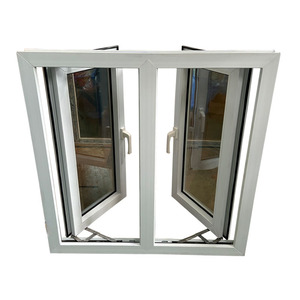
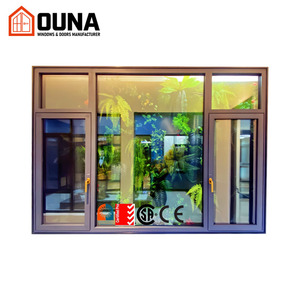
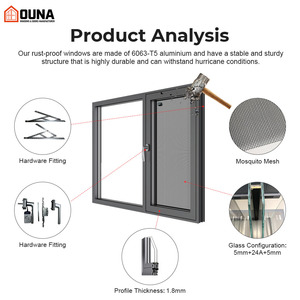
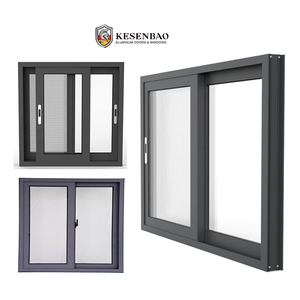
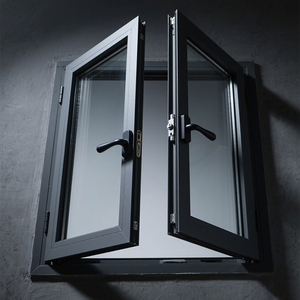
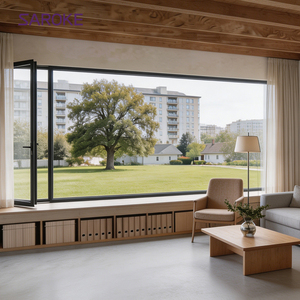
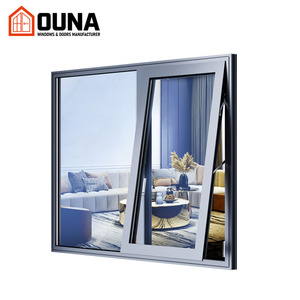
The Nagoya metropolitan area, located within the Nōbi Plain facing Ise Bay in Aichi Prefecture, represents one of Japan's most economically dynamic yet meteorologically challenging urban landscapes. As a major logistics, automotive, and commercial hub, building envelopes in Nagoya must withstand complex microclimatic stress factors. Historical weather events—most notably the catastrophic 1959 Vera Typhoon (Ise-wan Typhoon)—have permanently dictated Japanese structural and building code paradigms under the Ministry of Land, Infrastructure, Transport and Tourism (MLIT).
Commercial high-rises, coastal industrial complexes around the Port of Nagoya (Nagoya-ko), and luxury residential builds in districts such as Yagoto and Kakuozan require fenestration systems capable of resisting sustained typhoon-force wind loads exceeding 2400 Pa to 3600 Pa (equivalent to JIS A 4706 Class S-6 and S-7). Furthermore, Nagoya’s coastal proximity exposes external facade elements to persistent chloride-laden airborne salt, requiring specialized surface passivations to prevent localized pitting corrosion.
Information Gain Insight: Standard impact windows designed solely for Caribbean or Florida tropical storms often fail in the Japanese market due to differing load combination standards. While Florida (TAS 201/202/203) focuses heavily on single-directional missile impact, the Japanese Industrial Standards (JIS A 4702/4706) mandate rigorous dynamic water-tightness under cyclic wind pressure combined with high horizontal racking tolerance for dual typhoon-seismic safety.
In addition to seasonal typhoons originating in the Northwest Pacific Ocean between August and October, Aichi Prefecture sits within a high-seismic-hazard zone along the Nankai Trough. Fenestration systems exported to Nagoya must feature elastic frame-to-wall mounting anchors and structural silicone glazing (SSG) channels capable of absorbing high inter-story drift ratios without compromising the pane seal integrity or shattering the outer tempered glass layer.
As a leading China wholesale hurricane window manufacturer and direct exporter to Nagoya, our production lines integrate advanced extrusion metallurgy with high-density thermal isolation barriers. We maintain two core profile technologies engineered for the Japanese climatic profile:
Extruded from primary aluminum ingot with a tensile strength exceeding 160 MPa. Features dual Polyamide PA66 GF25 thermal insulation strips that eliminate thermal bridging, preventing interior surface condensation during Nagoya's chilly winter mornings.
Glazing configurations utilize SentryGlas® (SGP) ionoplast or high-viscosity Polyvinyl Butyral (PVB) interlayers sandwiched between double or triple tempered glass panes. Capable of stopping high-velocity airborne debris up to 50 m/s.
Coated with 3-coat fluorocarbon (PVDF) resin finishes, tested under CASS 1000-hour accelerated salt-spray chambers to ensure zero oxidation, chalking, or color fading when exposed to Nagoya Port's marine environment.
To assist Japanese structural engineers, general contractors, and trade buyers in evaluating our hurricane fenestration systems, the following matrix outlines factory performance specs verified under international and domestic testing standards:
| System Category | Frame Material & Alloy | Wind Load Resistance (Pa) | Water Tightness (JIS A 4706) | Thermal U-Factor (W/m²·K) | Acoustic Damping (STC) |
|---|---|---|---|---|---|
| Heavy Duty Casement | 6063-T5 Thermally Broken Aluminum | 3600 Pa (Class S-7) | 500 Pa (Class W-5) | 1.3 - 1.6 W/m²·K | STC 42 / T-3 Rating |
| Triple-Glazed Tilt & Turn | Polyamide Reinforced Aluminum | 3000 Pa (Class S-6) | 500 Pa (Class W-5) | 0.95 - 1.2 W/m²·K | STC 45 / T-4 Rating |
| Multi-Chamber Vinyl PVC | Rigid High-Impact uPVC Profile | 2400 Pa (Class S-5) | 350 Pa (Class W-4) | 1.1 - 1.4 W/m²·K | STC 38 / T-2 Rating |
| Minimalist Sliding Door | Structural Slim-Line Aluminum | 2800 Pa (Class S-6) | 400 Pa (Class W-4) | 1.5 - 1.8 W/m²·K | STC 36 / T-2 Rating |
Our export fenestration solutions are designed to address the specific architectural topologies found across Aichi Prefecture, Mie Prefecture, and Gifu Prefecture:
Buildings located along the coastline of Minato Ward require absolute water-tightness during storm surges. Our casement and awning systems feature continuous double German EPDM gasket seals around the entire perimeter. Combined with multi-point locking gear from Hoppe and Siegenia, the sash is pulled mechanically tight against the frame, eliminating rain infiltration even when driven by 45 m/s typhoon gusts.
High-end residential developments in Nagoya’s eastern suburbs emphasize expansive glass vision panels with slim sightlines. Our thermally broken aluminum casement and lift-and-slide doors allow floor-to-ceiling glass dimensions without sacrificing impact safety or energy ratings. Low-E coated double insulated glass units (IGU) reduce solar heat gain (SHGC < 0.23), keeping indoor spaces cool during Japan’s intensely hot July-August humidity.
Along the Isewangan Expressway, commercial office spaces and industrial control rooms require substantial acoustic isolation from continuous heavy truck traffic and railway noise (Shinkansen and Meitetsu lines). Our triple-glazed laminated windows achieve an acoustic damping rating up to STC 45 (JIS T-4 grade), turning high-decibel exterior environments into peaceful working spaces.
Japan’s national push toward Zero Energy Houses (ZEH) and mandatory energy conservation standards by MLIT has reshaped fenestration procurement. Windows account for over 50% of summer heat gain and winter heat loss in typical residential structures. By importing factory-direct thermally broken aluminum and high-performance multi-chamber vinyl windows from China, Nagoya builders can achieve strict ZEH U-value benchmarks at a significantly lower capital expenditure than local retail distribution channels provide.
Furthermore, our factory engineering team provides complete CAD shop drawings, glass calculation reports, and structural calculations formatted for Japanese building confirmation applications (Kensetsu Ninsho / Kenchiku Kakunin), ensuring seamless approval by local authorities in Aichi Prefecture.
As a seasoned exporter with decades of experience serving Asian and international shipping lanes, we manage the entire supply chain from manufacturing to port discharge:
Clear, direct answers regarding certifications, shipping logistics, customization, and warranty coverage.
Our impact fenestration systems are tested in ISO 17025 accredited laboratories. We provide cross-certification reports mapping ASTM E1996 / AS2047 test results directly to JIS A 4706 performance classes (Class S-5 to S-7 for wind resistance, and Class W-4 to W-5 for water tightness), accepted by Japanese structural auditors.
Standard production cycles take 3 to 4 weeks depending on the profile finish (powder coating vs. anodizing) and glass makeup. Sea transit from our coastal factory ports to Nagoya Port takes approximately 3 to 5 days. Total door-to-port delivery is typically within 4 to 6 weeks.
While multi-chamber uPVC offers excellent thermal efficiency, 6063-T5 architectural aluminum provides much higher structural flexural strength. For high-rise commercial facades exposed to elevation wind pressure in Nagoya, aluminum allows slenderness without the risk of frame deformation under load.
All aluminum extrusions undergo a chromate or zirconium pre-treatment before applying a 3-coat PVDF fluorocarbon paint system or a 25-micron anodized coating. Hardware components utilize grade 304 or 316 stainless steel to eliminate rust risks.
Yes. Every unit is manufactured to order based on architectural window schedules. We offer high-transparency stainless steel mesh (304 grade fly screens), motorized blind integration within double glass IGUs, and low-E tint choices (clear, bronze, grey, blue-green).
We provide a written 10-year factory warranty covering aluminum frame extrusions, surface finishes, and insulated glass seal integrity, along with a 5-year warranty on mechanical hardware and hardware accessories.
Looking to specify or wholesale impact-rated window and door systems for upcoming construction projects in Nagoya or the broader Chubu region? Connect with our engineering sales office today for custom drawings, technical submittals, and factory-direct pricing.