High-performance fenestration solutions tested for NatHERS 7-Star compliance, hurricane-grade wind loads, and thermal efficiency across Australia's climate zones.
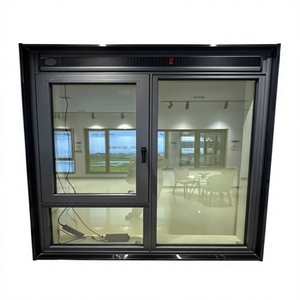
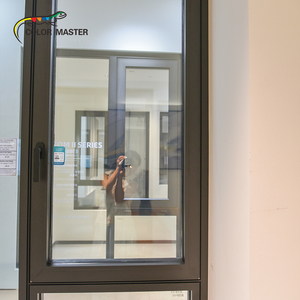
The Australian building sector is undergoing a profound structural shift driven by updated National Construction Code (NCC 2022) energy metrics. The mandate elevating residential efficiency standards from 6-Star to 7-Star NatHERS (National Home Energy Rating Scheme) has rendered non-thermally broken, monolithic aluminum window frames virtually obsolete for new residential builds, commercial developments, and high-end retrofits across Sydney, Melbourne, Brisbane, Adelaide, and Perth.
Standard aluminum is a superb structural material—durable, lightweight, corrosion-resistant, and infinitely recyclable. However, raw aluminum possesses an extraordinarily high thermal conductivity rating ($\lambda \approx 160\text{ to }200 \text{ W/m}\cdot\text{K}$). In Australia's diverse microclimates—ranging from the freezing alpine winters of Victoria and Tasmania (Zone 7 & 8) to the scorching radiant sun of Outback Queensland and Western Australia (Zone 1 & 2)—uninsulated aluminum framing acts as a direct thermal bridge. This causes massive heat gain in summer, heat loss in winter, and damaging internal condensation that spoils timber reveals and indoor air quality.
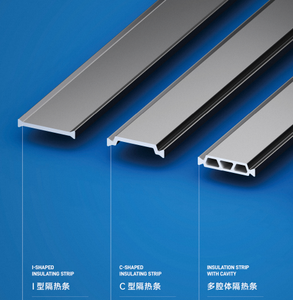
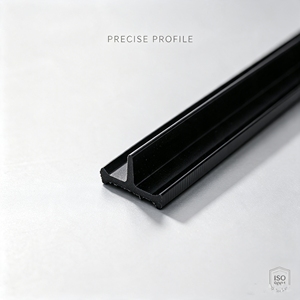
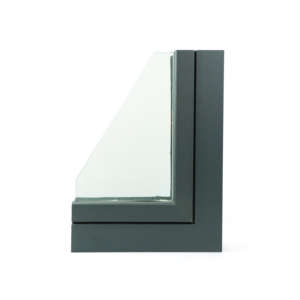
A "thermal break" or "broken bridge" (断桥铝) isolates the exterior extruded aluminum profile from the interior profile by mechanical insertion of a low-conductivity polymer material. By replacing the solid metal core with a specialized structural insulating polyamide bar ($\lambda \approx 0.3 \text{ W/m}\cdot\text{K}$), heat transfer across the frame is reduced by more than 500 times compared to monolithic aluminum.
Thermal break extrusions drop total building cooling loads in Brisbane summers and heating demands in Melbourne winters, guaranteeing compliance with 7-Star thermal energy budgets.
By keeping the interior profile frame temperature close to indoor ambient air temperatures, thermal break systems eliminate dew-point condensation, preventing mold formation and structural frame rot.
Using 6063-T5 aluminum extrusions combined with glass-fiber-reinforced PA66 strips ensures thermal expansion coefficients match perfectly, eliminating frame distortion under intense UV exposure.
When sourcing wholesale thermal break window profiles from China factories, Australian engineers, fabricators, and window dealers must distinguish between two primary thermal barrier manufacturing methods: Polyamide PA66 GF25 Strip Insertion and Pour-and-Debridge (P&D) Polyurethane Resin.
For the Australian market, PA66 GF25 Polyamide Strips are the gold standard. Polyamide 66 reinforced with 25% short glass fibers matches the linear coefficient of thermal expansion ($\alpha = 2.3 \times 10^{-5}/\text{K}$) of 6063-T5 structural aluminum extrusions. This equal rate of expansion and contraction prevents internal shear stress during extreme temperature differentials (such as a $45^\circ\text{C}$ Australian summer heatwave followed by a cool evening drop).
| Engineering Parameter | PA66 GF25 Polyamide Strip System | Pour & Debridge (P&D) Resin | Australian Market Impact |
|---|---|---|---|
| Thermal Conductivity ($\lambda$) | 0.25 – 0.30 W/m·K | 0.12 – 0.21 W/m·K | Both significantly interrupt thermal flow through aluminum profiles. |
| Transverse Tensile Strength | ≥ 80 MPa (High Structural) | 30 – 50 MPa (Medium Structural) | PA66 handles heavy double/triple glazing unit weight on high-rise sashes. |
| Coefficient of Thermal Expansion | 2.3 × 10⁻⁵ / K (Matches Aluminum) | 6.5 × 10⁻⁵ / K (Mismatched) | P&D can suffer delamination or seal breakdown in extreme Australian solar heat. |
| Melting Point & Fire Performance | 250°C (High Thermal Stability) | 110°C – 150°C (Decomposes earlier) | PA66 is crucial for BAL-40 and BAL-FZ Bushfire Attack Level compliance. |
| Dual-Color Anodizing/Powder Coat | Yes (Can coat profiles separately before assembly) | No (Resin breaks down in bake oven) | Allows distinct exterior (e.g., Dulux Monument) & interior finishes (e.g., Pearl White). |
Our OEM/ODM manufacturing facility utilizes advanced German-engineered roll-knurling and double-knuckle assembly machines to guarantee zero movement between aluminum chambers and polyamide bars:
Customizing window specifications according to regional Australian wind classifications (AS4055 / AS1170.2), corrosive environmental categories (AS4312), and bushfire ratings (AS3959) is critical for structural compliance and insurance sign-offs.
Locations: Gold Coast, Sydney Eastern Suburbs, Perth Coastal Fringe, Newcastle.
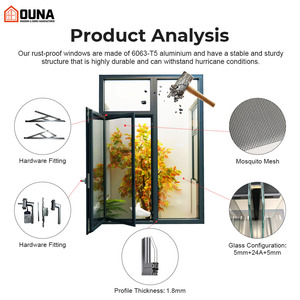
Technical Spec: 6063-T5 aluminum treated with 25-micron Architectural Class 2 Anodizing or Qualicoat Class 2 Interpon powder coating. Paired with 316-grade stainless steel multi-point locks, heavy-duty rollers, and friction stays to withstand C5-M marine salt spray corrosion.
Locations: Blue Mountains (NSW), Dandenong Ranges (VIC), Adelaide Hills (SA).
Technical Spec: Thermally broken frames fitted with 6mm/8mm toughened safety glass or laminated ceramic fire-rated glass, stainless steel flyscreens (mesh aperture < 2mm), non-combustible EPDM compression gaskets, and high-melting-point PA66 thermal barrier strips.
Locations: Melbourne CBD, Brisbane South Bank, Sydney Olympic Park.
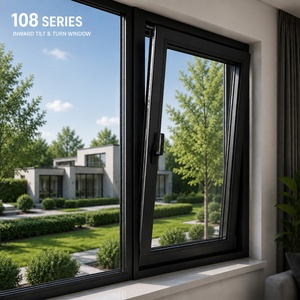
Technical Spec: NFRC Four-Seal Tilt & Turn and Casement systems engineered for ultimate limit state wind pressures ($N4 / N5 / C2$ ratings up to 4500 Pa). Featuring 54mm thermal insulation depth and acoustic laminated glass for up to STC 44dB noise dampening.
As a leading Chinese custom manufacturer of thermal break extrusions, windows, and doors, our enterprise combines metallurgy mastery with rigorous export logistics. We do not just sell standard windows; we engineer bespoke fenestration schedules tailored to architectural shop drawings.
We extrude strictly from 100% primary aluminum ingots (zero scrap metal contamination), ensuring maximum mechanical tensile yield (≥ 160 MPa) and perfect surface adhesion for powder coating.
Our in-house die design center can create custom extrusion profiles within 12–15 days to replicate specified Australian window brands, sub-head, sub-sill, and fin-frame reveals for easy timber installation.
Windows and long profiles are packaged using protective blue film, foam corner wraps, non-fumigation plywood crates, and steel A-frames equipped with forklift pockets for safe unloading at Australian job sites.
Our window systems are tested according to AS2047 / AS4055 standards for Deflection Test (structural wind pressure), Air Infiltration Test (air tightness), Water Penetration Resistance Test (up to 600 Pa), and Ultimate Strength Test. We supply factory test reports, NATA-accredited lab certificates, and full glass compliance certificates under AS1288.
Yes! We stock and apply certified AkzoNobel Interpon and Dulux powder coatings. We can precisely match popular Australian architectural finishes including Monument, Surfmist, Pearl White, Woodland Grey, Satin Black, and Anodized Silver finishes.
Under the China-Australia Free Trade Agreement (ChAFTA), Australian importers presenting a valid Certificate of Origin (Form COO / FTA) can claim preferential 0% customs duty rate on qualifying aluminum extrusions and completed window assemblies under HS Code 7610.10. Importers only pay the standard 10% Goods and Services Tax (GST) upon customs clearance.
For cool temperate climates like Melbourne and Hobart (Zones 6–7), we recommend wider 24mm to 35.3mm PA66 insulation strips combined with Argon-filled Low-E double glazing to minimize winter heat conduction. For tropical and sub-tropical regions like Queensland (Zones 1–2), a 14.8mm to 24mm PA66 strip paired with Solar Control Low-E glass balances structural budget with high solar heat rejection ($SHGC \le 0.30$).
Standard custom window production takes 25 to 35 days following shop drawing sign-off and color sample verification. Ocean shipping duration from Ningbo/Shanghai/Shenzhen ports to major Australian ports is approximately 12–16 days to Sydney/Brisbane, 14–18 days to Melbourne, and 18–22 days to Fremantle/Perth.
Yes. We supply both fully fabricated, factory-glazed complete windows and wholesale 5.8m/6.0m stock aluminum profiles pre-crimped with PA66 GF25 thermal break strips. This allows Australian window fabricators to cut, corner-crimp, and glaze profiles locally in their own workshops.
Partner with an authoritative OEM China manufacturer. Send us your architectural schedules, CAD floorplans, or tender specifications for an immediate engineering quote and thermal performance analysis.