Explore our export-certified thermal break aluminum and impact glass assemblies, engineered to fulfill EN standards, ÖNORM requirements, and modern Austrian low-energy residential building criteria.
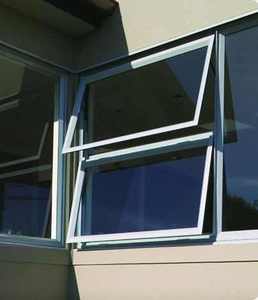
Integrated electric motorized blinds, double tempered toughened glass, high water-tightness rating for roof pitches exposed to heavy Austrian snowpack.
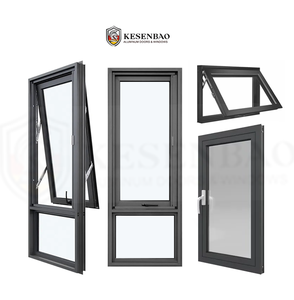
Dual-action European tilt-and-turn mechanics with high STC acoustic dampening for urban residential apartments in Vienna and Salzburg.
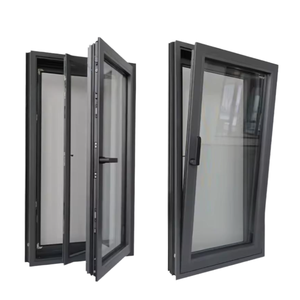
High-insulation polyamide PA66 thermal barrier, 6063-T5 aluminum extrusions, stainless flyscreen mesh for lakeside residential builds.
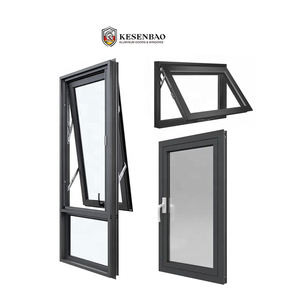
Multi-point locking gear, double/triple glazed options, CE & AS2047 windproof certification optimized for high wind loads in mountainous terrain.
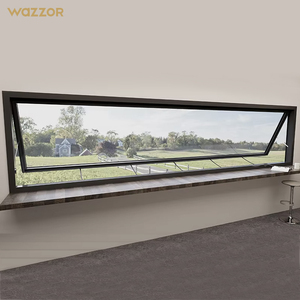
Heavy-duty gas strut opening mechanism ideal for indoor-outdoor restaurant pass-throughs, mountain huts, and modern commercial spaces.
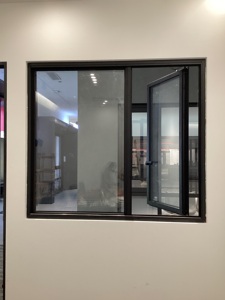
Minimalist architectural profile with wide 20A air cavity, Argon gas fill capability, delivering maximum natural light and extreme low U-values.
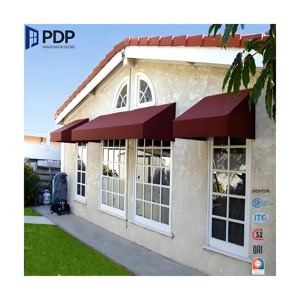
Custom luxury patina finishes, slim steel-composite thermal profile, high waterproof rating suited for historic renovation projects.
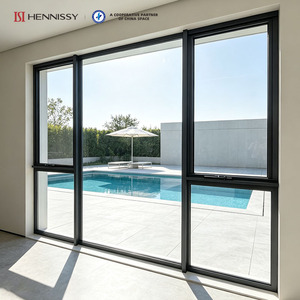
High structural load rating, anti-burglar multi-point lock engineering, continuous perimeter weatherstripping for wind-driven rain isolation.
Austria represents one of Europe's most demanding fenestration environments. Situated at the crossroads of Central European continental climate zones and severe Alpine weather systems, Austrian building codes—specifically OIB Guideline 6 (Richtlinie 6) and ÖNORM B 5320—require fenestration products to maintain exceptional thermal efficiency, airtightness, structural deflection control, and hail impact protection.
While European domestic fabrication has faced rising energy costs and supply chain constraints, top-tier Chinese window manufacturers have elevated their engineering capabilities. By pairing high-precision 6063-T5 aluminum extrusions, German-engineered multi-point hardware (such as Siegenia, Hoppe, and Roto), and advanced automated insulating glass unit (IGU) lines, leading Chinese suppliers now deliver custom architectural fenestration packages that meet or exceed Austrian technical mandates at significant cost efficiency.
High-tensile architectural aluminum alloy with precision wall thicknesses up to 3.0mm, providing structural stability against extreme alpine wind pressures.
Technoform PA66 GF25 thermal barriers interrupt structural heat transfer, preventing frame condensation during harsh sub-zero Austrian winters.
Laminated safety glass configurations tested to resist severe hail impact (HW3 to HW5 ratings) and wind-borne debris in exposed mountain regions.
When selecting a Chinese manufacturing partner for Austrian commercial or residential developments, comparing physical engineering specifications is crucial. The table below outlines standard performance metrics across our product lines benchmarked against Austrian EN standards.
| Performance Standard | Austrian Code Requirement | Standard Thermal Line | High-Alpine Impact Line | Passivhaus Certified Series |
|---|---|---|---|---|
| Thermal Transmittance (Uw) | ≤ 1.1 W/(m²·K) (New Build) | 1.0 - 1.2 W/(m²·K) | 0.85 - 0.95 W/(m²·K) | 0.72 - 0.78 W/(m²·K) |
| Air Permeability (EN 12207) | Class 3 Minimum | Class 4 | Class 4 | Class 4 (Tightest Seal) |
| Water Tightness (EN 12208) | Class 7A (300 Pa) | Class 9A (600 Pa) Class E750 (750 Pa) | Class E1050 (1050 Pa) | Class E900 (900 Pa) |
| Wind Load Resistance (EN 12210) | Class C3 - C4 | Class C4 | Class C5 (Extreme Pressure) | Class C4 |
| Sound Insulation (EN ISO 717-1) | 35 - 42 dB (Urban) | 38 dB | 44 dB | 48 dB (Triple Laminated) |
| Glazing Architecture | Double / Triple IGU | 5mm+12A+5mm Low-E | 6mm Temp + 1.52PVB + 6mm + 16A + 6mm | 4mm Low-E + 18Ar + 4mm + 18Ar + 4mm Low-E |
Different geographical regions in Austria impose vastly distinct physical stresses on exterior fenestration. Custom engineering allows Chinese manufacturers to tailor frame extrusions, glazing build-ups, and hardware to specific Austrian deployment environments.
Primary Concern: High snow loads, solar radiation at high altitude, freeze-thaw cycles.
Recommended System: Triple-pane toughened laminated glass with argon filling, warm-edge spacers, and heavy-gauge awning skylights equipped with automated motor drives to shed snow accumulation without thermal bridging.
Primary Concern: Acoustic attenuation, slim profile historical aesthetics, burglar resistance.
Recommended System: European-style Tilt & Turn casements featuring multi-point perimeter locking hardware, acoustic laminated glass interlayers (STC > 42 dB), and narrow frame sightlines that preserve interior daylighting.
Primary Concern: Wind-driven moisture, driving rain, expansive panoramic sightlines.
Recommended System: Heavy-duty lift-and-slide or minimal sliding glass door systems with subterranean drain tracks, marine-grade anodized or powder-coated aluminum finishes, and high water-tightness thresholds (>900 Pa).
Importing windows into Austria requires rigorous documentation. Windows must carry valid CE Marking under EN 14351-1 (Windows and External Pedestrian Door Sets). Furthermore, the wall-to-window joint installation standard ÖNORM B 5320 mandates three-level sealing: vapor-tight on the interior face, thermal/acoustic insulation in the middle core, and rain-tight yet vapor-permeable on the exterior face. Premier Chinese factories provide pre-engineered frame flanges and specialized EPDM sealing membranes tailored to ÖNORM compliance.
Austria is a global pioneer in Passive House architecture. Fenestration systems must achieve overall window U-values ($U_w$) of less than $0.80 \text{ W/(m}^2\text{K)}$. Achieving this requires warm-edge spacer bars (such as Technoform or Swisspacer), triple low-E coatings, argon gas filling (90%+ concentration), and deep polyamide thermal breaks (minimum 24mm to 34mm depth) integrated into the aluminum extrusion profiles.
Central Europe has experienced an increase in severe summer hail storms. Austrian insurers and builders increasingly demand certified hail-resistant glass (HW3, HW4, or HW5). Top Chinese suppliers utilize thick outer tempered layers (up to 8mm or 10mm) combined with SentryGlas® (SGP) or PVB interlayers to prevent breakage under impact from hailstones up to 50mm in diameter.
With over three decades of engineering experience, our factory bridges the gap between high-precision Chinese extrusion capability and European architectural expectations.
Every shipment includes a full technical export package: Declaration of Performance (DoP), CE Certification under EN 14351-1, factory test reports for thermal U-values and air/water tightness, commercial invoice, packing list with HS codes, and mill test certificates for aluminum profiles.
By incorporating multi-chambered polyamide (PA66 GF25) thermal break strips and multi-channel EPDM weatherstripping, our profiles prevent cold bridging. When paired with triple Low-E insulated glass filled with Argon, interior surface temperatures remain comfortable, eliminating condensation even when exterior temperatures drop to -20°C.
Manufacturing typically takes 4 to 6 weeks depending on project scale and custom color finishes. Ocean transit to key European gateway ports (such as Koper, Slovenia or Hamburg, Germany) takes 28 to 35 days, followed by direct rail/truck freight to Austrian destinations (Vienna, Linz, Graz, Innsbruck).
Yes. Our in-house tooling shop can engineer custom aluminum extrusion dies to replicate historic profiles or meet specific slim-line architectural sightlines required by Austrian urban planning authorities.
We provide a comprehensive written factory warranty: 10 years on aluminum profiles and surface finishes (Qualicoat standard), 10 years on insulated glass seal integrity, and 5 years on mechanical hardware operating components.
Connect directly with our senior structural glazing engineers to review shop drawings, request physical profile samples, or receive a factory-direct cost quotation within 24 hours.